Single-mode vs multimode fibre: choosing the right transceiver
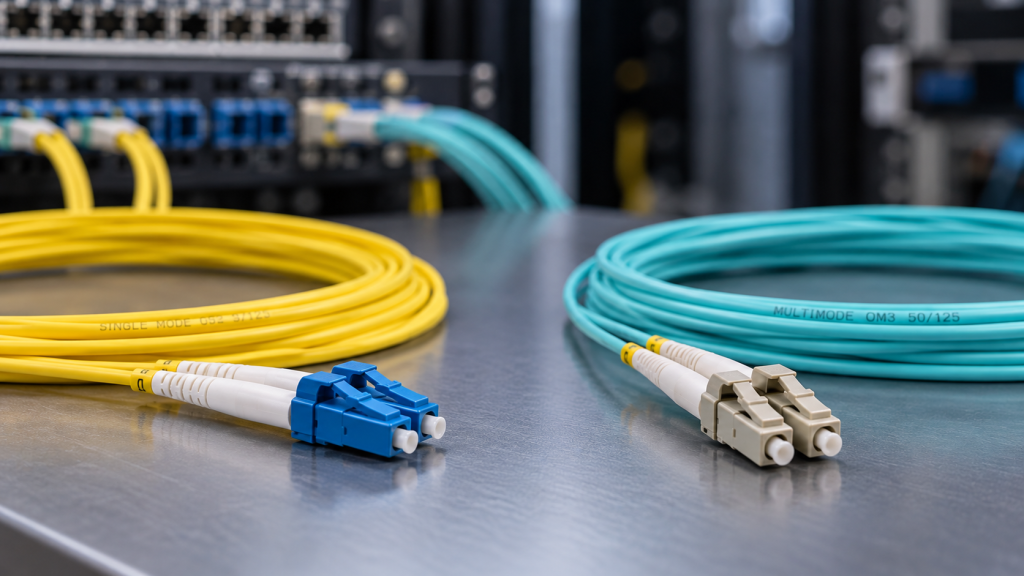
The cabling is already in the ground, the switch ports are ready, and someone has to decide which optics to order. Get the fibre type wrong and the link either will not come up at all, or it comes up and fails intermittently in a way that costs a week to diagnose. Single-mode or multimode […]
400G breakout explained: 4x100G, 2x200G and when to use it
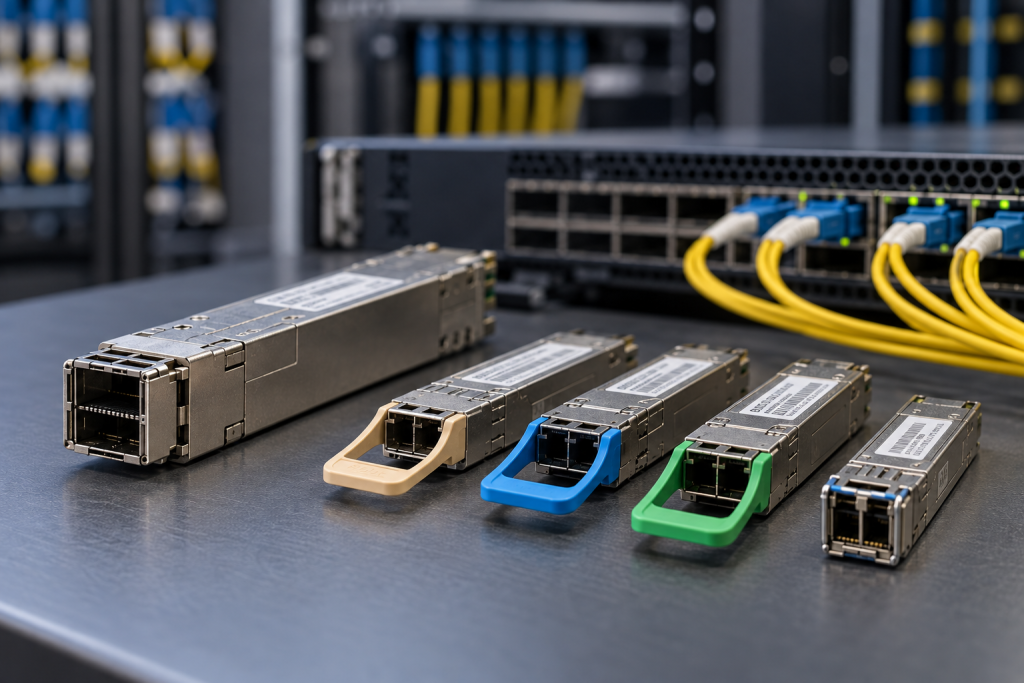
A 400G switch port is expensive, and most of the servers and leaf switches you want to connect to it do not run at 400G. Breakout is how you stop wasting the difference: one 400G port becomes four 100G links, or two 200G links, and suddenly the port density on that line card makes financial […]
CWDM vs DWDM: which one does your network actually need?

You have two sites, one pair of fibres between them, and a lot more traffic than that fibre currently carries. Wavelength division multiplexing is how you get more out of the strands you already have — and the first decision is CWDM or DWDM. They solve the same problem in very different ways. CWDM is […]
QSFP-DD vs OSFP: choosing the right 400G and 800G form factor
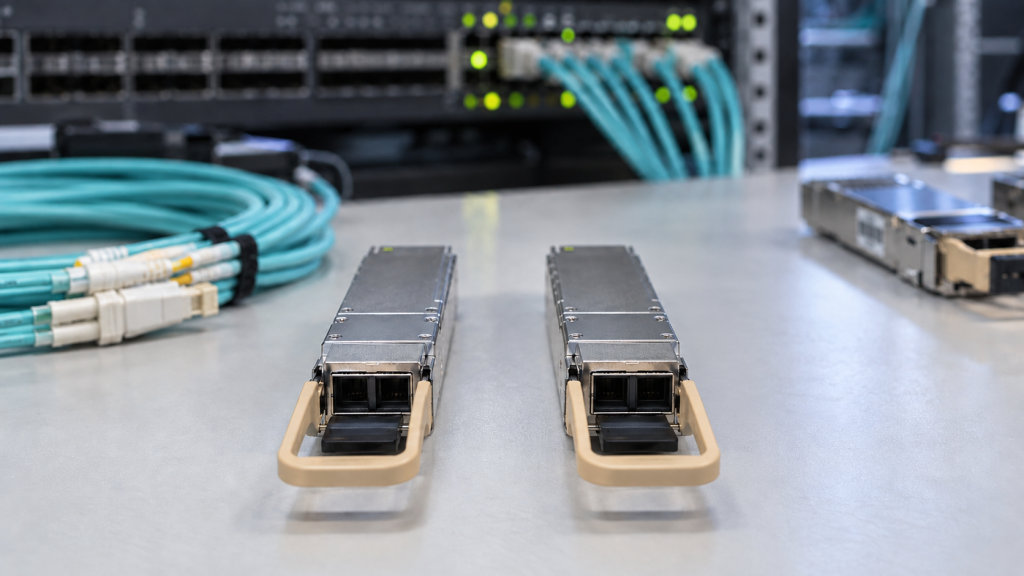
Same headline speeds, very different decisions. QSFP-DD vs OSFP compared on electrical lanes, thermal headroom, backwards compatibility and the roadmap past 800G – plus the five things to check before you order.
Transceiver coding explained: one module, every platform
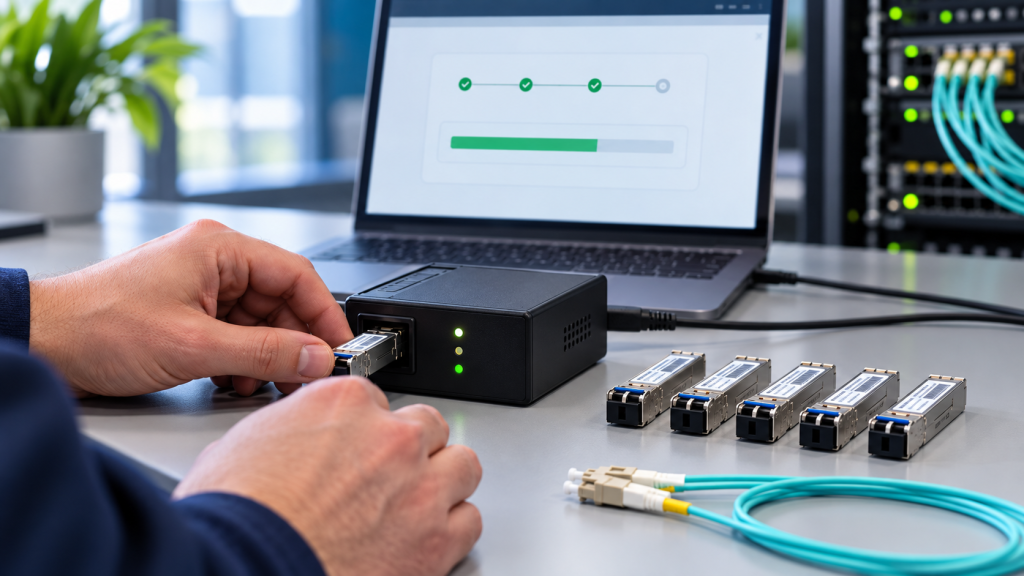
A switch rejecting a perfectly good optic is not an optical fault – it is an identification check. Here is how transceiver coding works, the inventory cost it creates, and how recoding collapses five lines of stock into one.
Do third-party optical transceivers void your warranty?
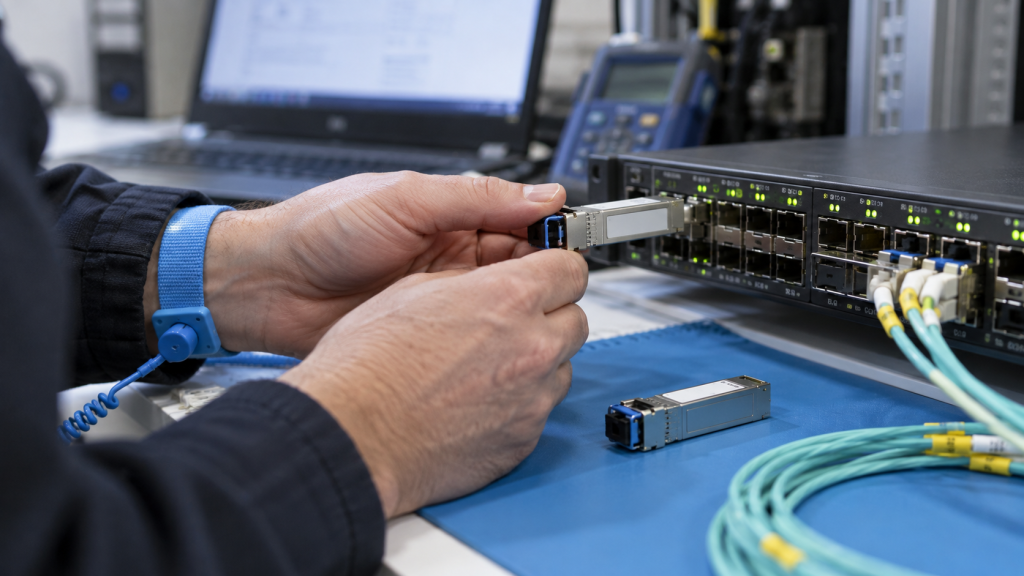
A compatible transceiver is a standards-built, hot-pluggable module – it does not modify your switch. Here is what OEM warranty terms actually say, what the law says about tie-in conditions, and the four steps that take the objection off the table.
How to spot a failing fibre link before it drops
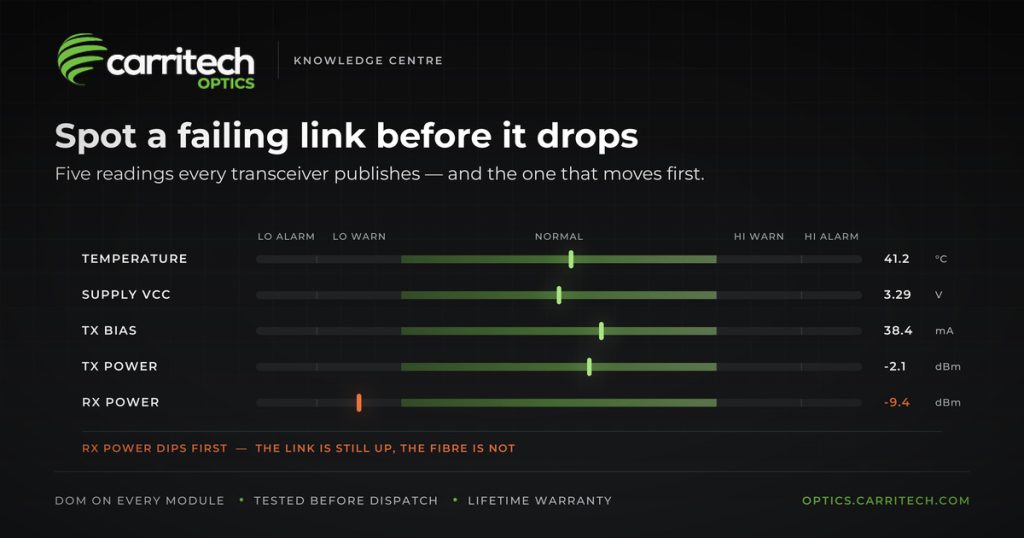
Every transceiver in your network is measuring itself right now and reporting the results. Most networks never look until something has already gone down. That is a missed opportunity, because the most common fibre failure — a connection slowly getting worse — shows warning signs weeks in advance. You just have to know which number […]
MPO polarity explained: Type A, B and C in plain English
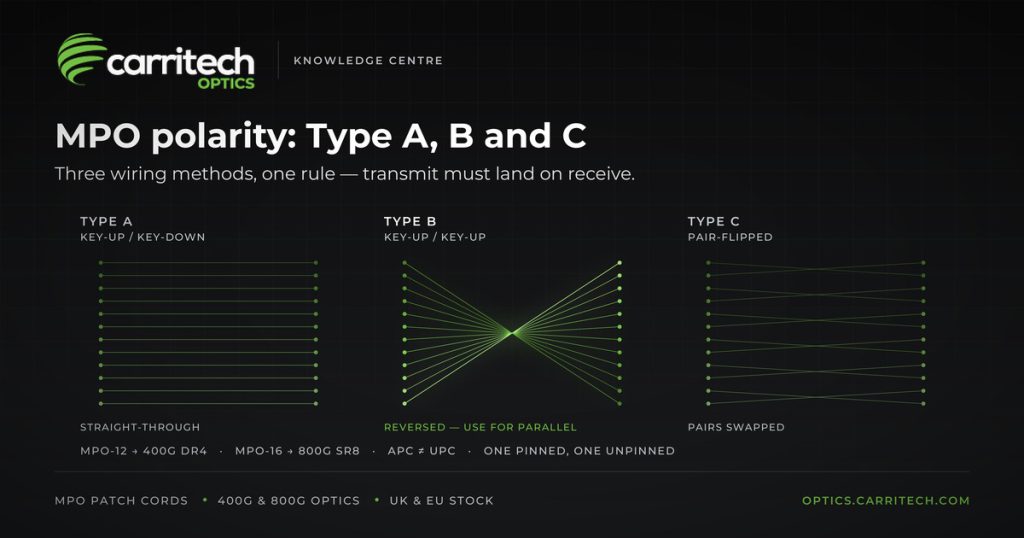
MPO polarity has one job: make sure the light leaving one switch arrives at the receiver on the other. Get it wrong and the link stays dark. It sounds complicated because of the naming. It is not. Here is the whole thing. The short answer Building a 400G or 800G link with parallel optics? Use […]
DAC vs AOC: which one should you actually buy?

If you need to connect two switches, you have three options: a copper DAC, an optical AOC, or transceivers with fibre between them. All three carry the same traffic. They cost very different amounts. Here is how to choose, without the jargon. The short answer Distance What to use Under 3 metres, same rack Passive […]
Optical transceiver testing: the 22 checks a module passes before it reaches you
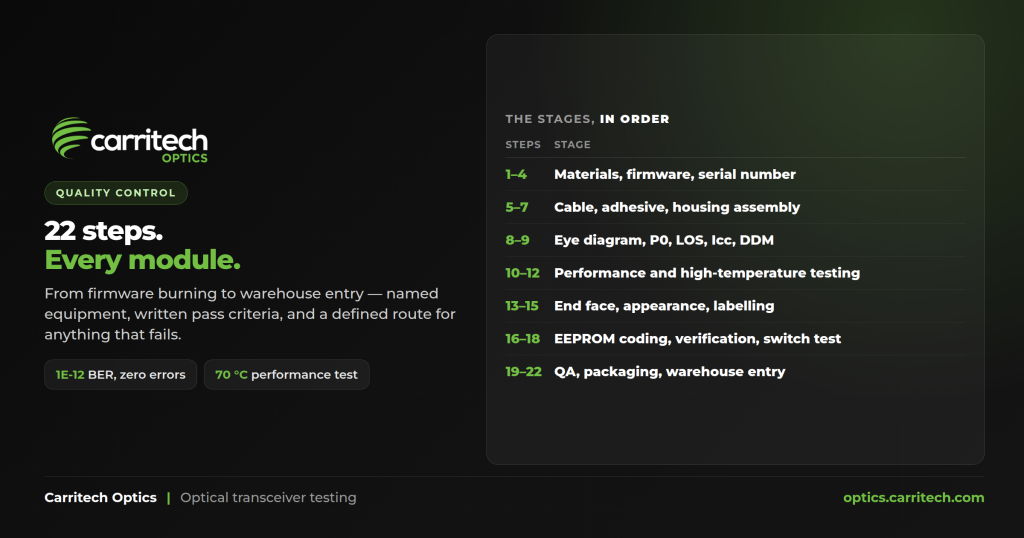
Most suppliers will tell you their optics are tested. Very few will tell you what that means. So here is our optical transceiver testing process, in the detail it actually exists in. The modules we supply are built to a documented 22-step quality control process, and this article walks the whole thing — what is […]