400G breakout explained: 4x100G, 2x200G and when to use it
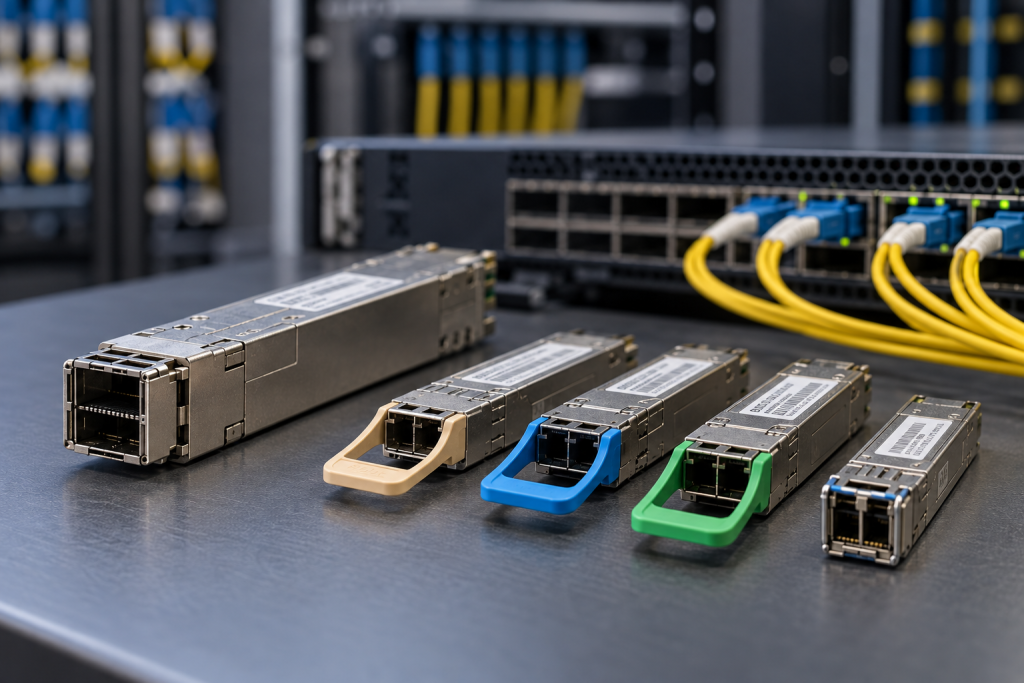
A 400G switch port is expensive, and most of the servers and leaf switches you want to connect to it do not run at 400G. Breakout is how you stop wasting the difference: one 400G port becomes four 100G links, or two 200G links, and suddenly the port density on that line card makes financial […]
QSFP-DD vs OSFP: choosing the right 400G and 800G form factor
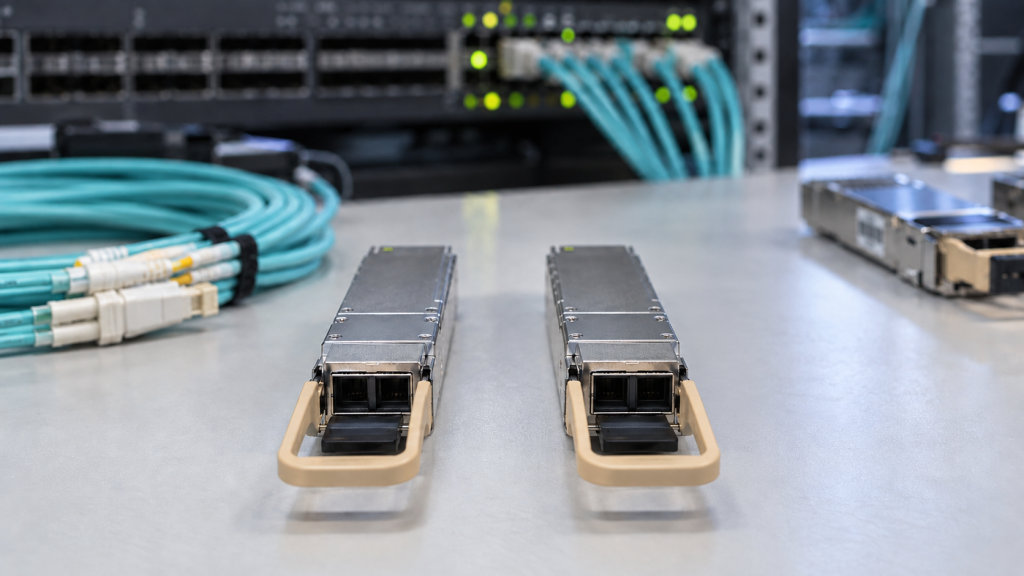
Same headline speeds, very different decisions. QSFP-DD vs OSFP compared on electrical lanes, thermal headroom, backwards compatibility and the roadmap past 800G – plus the five things to check before you order.
MPO polarity explained: Type A, B and C in plain English
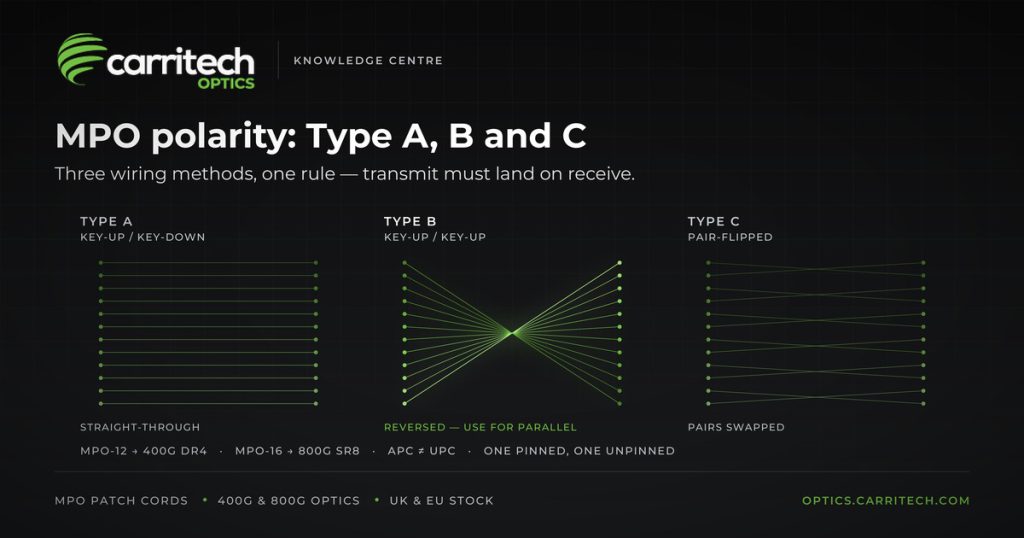
MPO polarity has one job: make sure the light leaving one switch arrives at the receiver on the other. Get it wrong and the link stays dark. It sounds complicated because of the naming. It is not. Here is the whole thing. The short answer Building a 400G or 800G link with parallel optics? Use […]
Catalyst 9300 and 9500 compatible optics: what works, by model and module
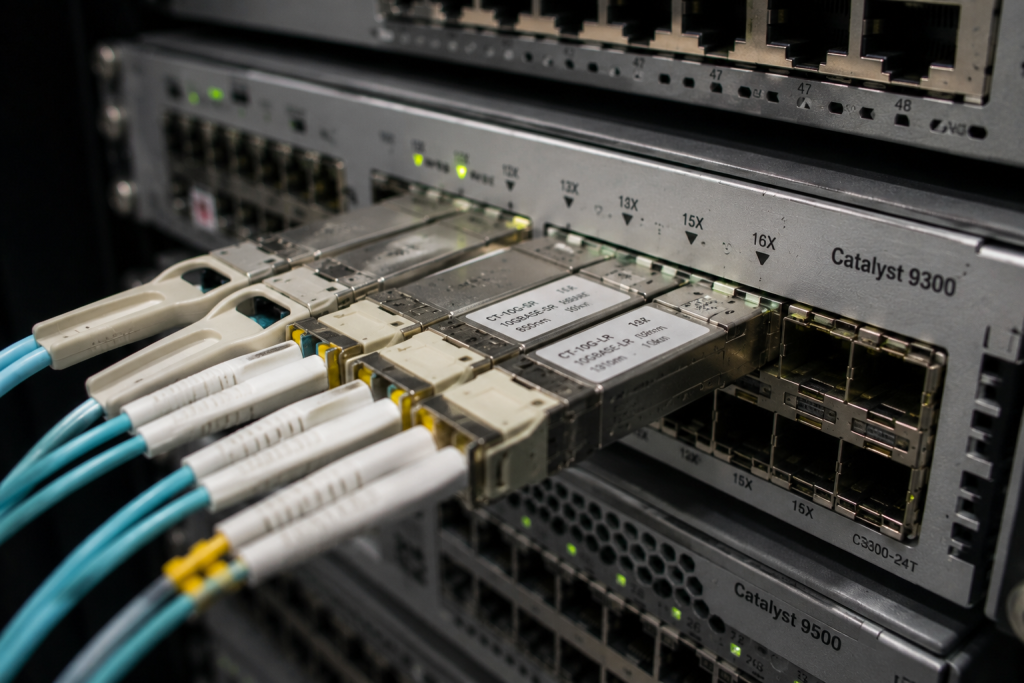
The Nexus range gets the data-centre attention, but the switches that actually carry most UK enterprises are Catalyst 9300s in the wiring closet and Catalyst 9500s in the core. And the optics question on Catalyst is structurally different from Nexus: on most 9300s the switch itself has no optical ports at all. The question is […]
800G and 1.6T migration: what to check before you buy optics

800G is no longer a roadmap slide. The optics ship in volume, two form factors have settled into their ecosystems, and the IEEE standard behind the mainstream variants has been published since 2024. What has not settled is the buying process — because an 800G transceiver migration fails or succeeds on details that never mattered […]