SMB and prosumer network optics: Ubiquiti, MikroTik, Netgear and the rest decoded
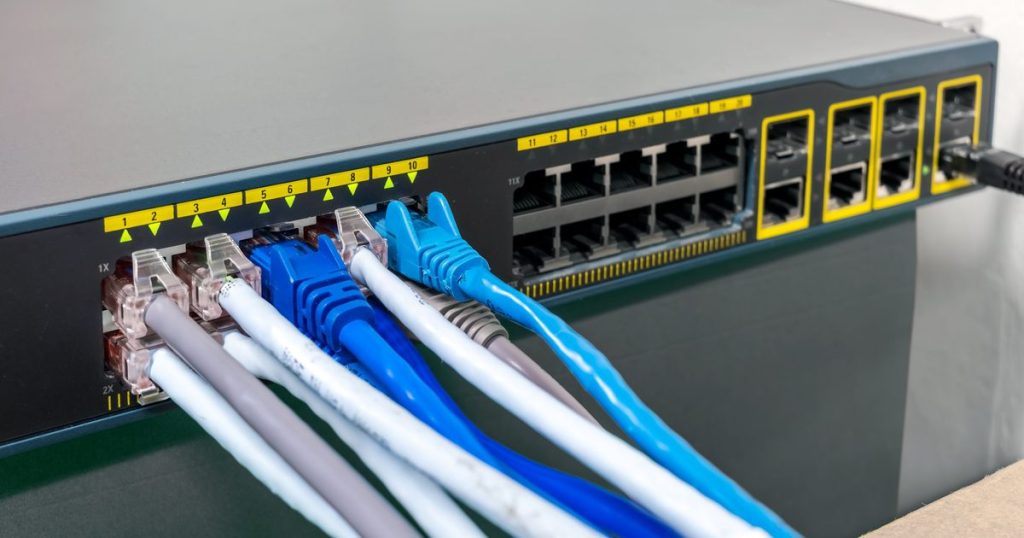
There is a reversal in this part of the market that nobody warns you about. The enterprise vendors give you opaque order codes and forgiving hardware. The small-business and prosumer vendors do the opposite: their part numbers are the most readable in the industry — a MikroTik S+31DLC10D tells you the form factor, the wavelength, […]
Ciena compatible optics: reading the XCVR and 160- part numbers
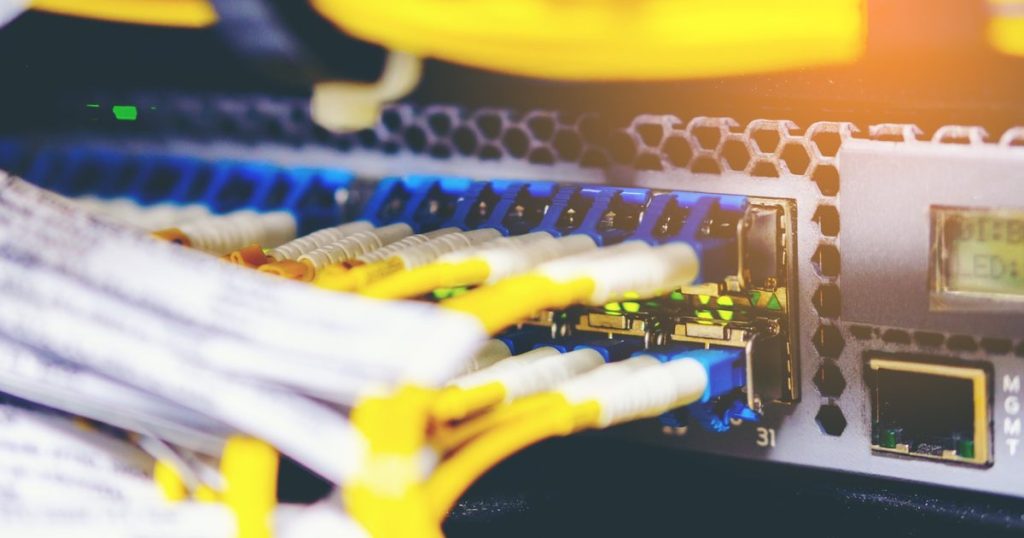
Almost every optical part number in this catalogue is an order code: a string that identifies a line item and tells you nothing about the module. Ciena is the exception. XCVR-S40V55 can be read character by character — a 10 Gigabit SFP+, 40 kilometres, 1550 nm — and once you know the convention you can specify […]
Server and storage platform optics: Lenovo, IBM, NetApp and Intel part numbers
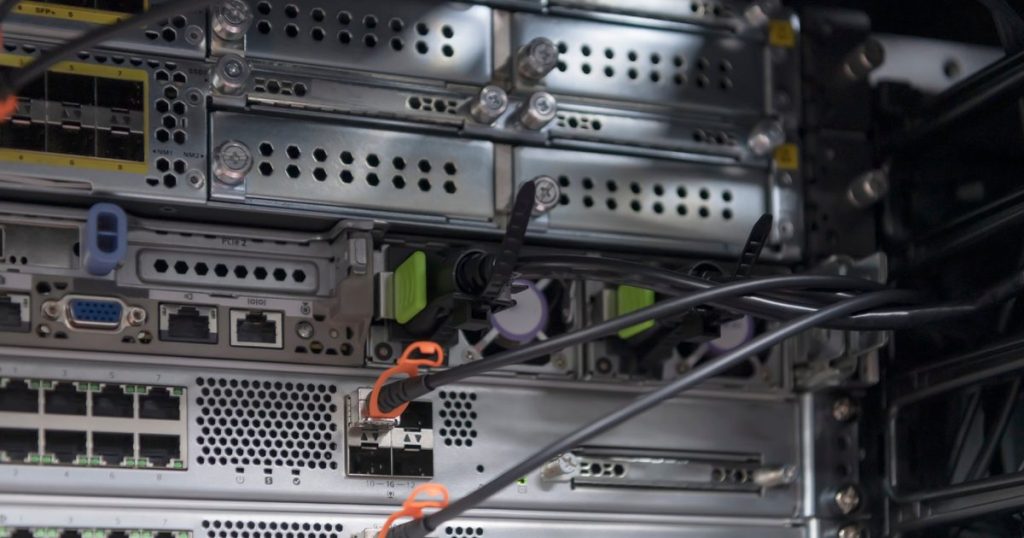
Some of the optics in this range do not have part numbers at all. ACHU, AJHE, AJHF, AJHJ and AJHK are IBM feature codes: four characters that identify something you can order against a machine, not something with a catalogue number. Ask a distributor for an ACHU and you will get a blank look. Ask […]
Security appliance optics: Fortinet, Palo Alto, F5 and Gigamon compatible modules
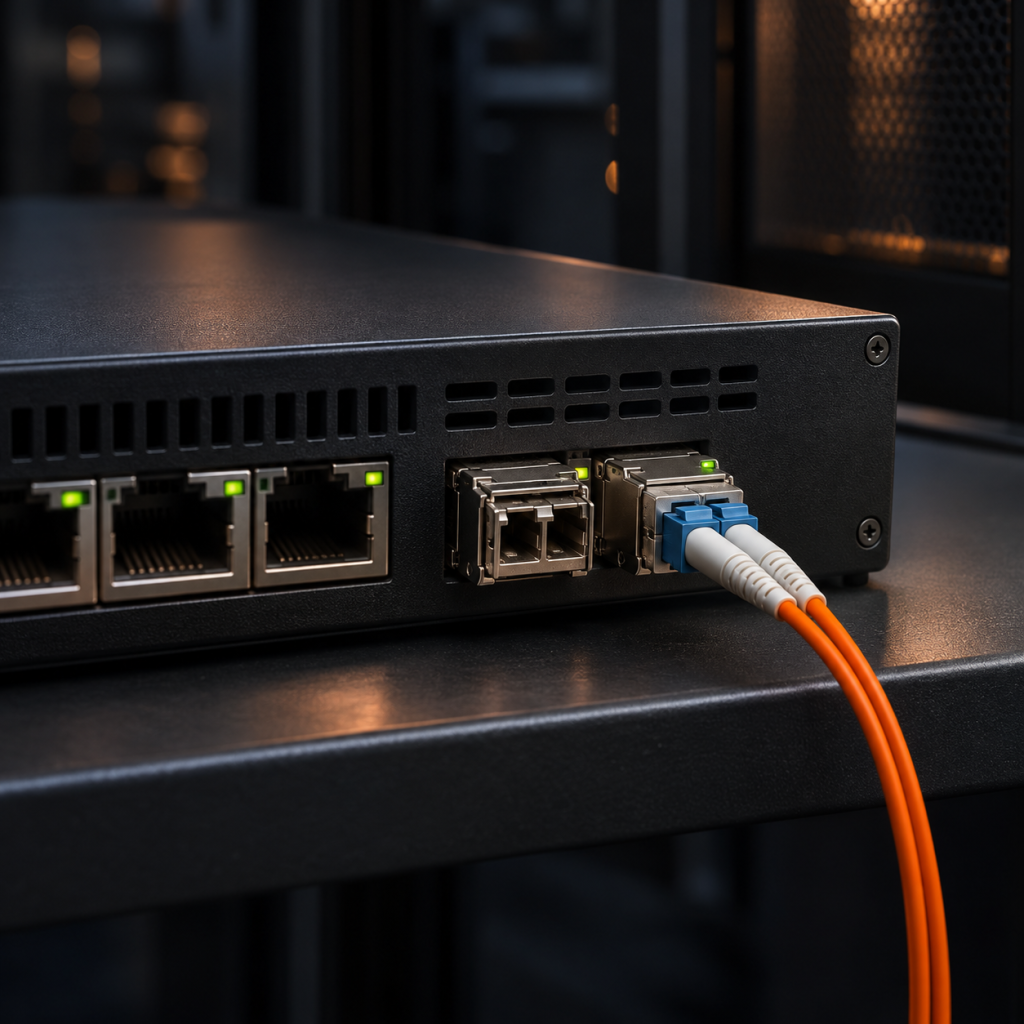
A firewall is the one device in a network that is deliberately in the middle of two things that do not trust each other. That has a consequence for optics that nobody mentions when the appliance is specified: the two sides of a security platform are frequently not the same kind of network, so the […]
Brocade compatible optics: the part numbers that now belong to three companies

One Brocade part number in a rack today can belong to any of three different companies. The XBR- and 57- codings on a SAN director went to Broadcom. The E-series and XBR- Ethernet codings on a data centre switch went to Extreme Networks. The LP32- optics on a host bus adapter arrived with Emulex, which […]
NVIDIA compatible optics: the Mellanox part numbers and the AI fabric range
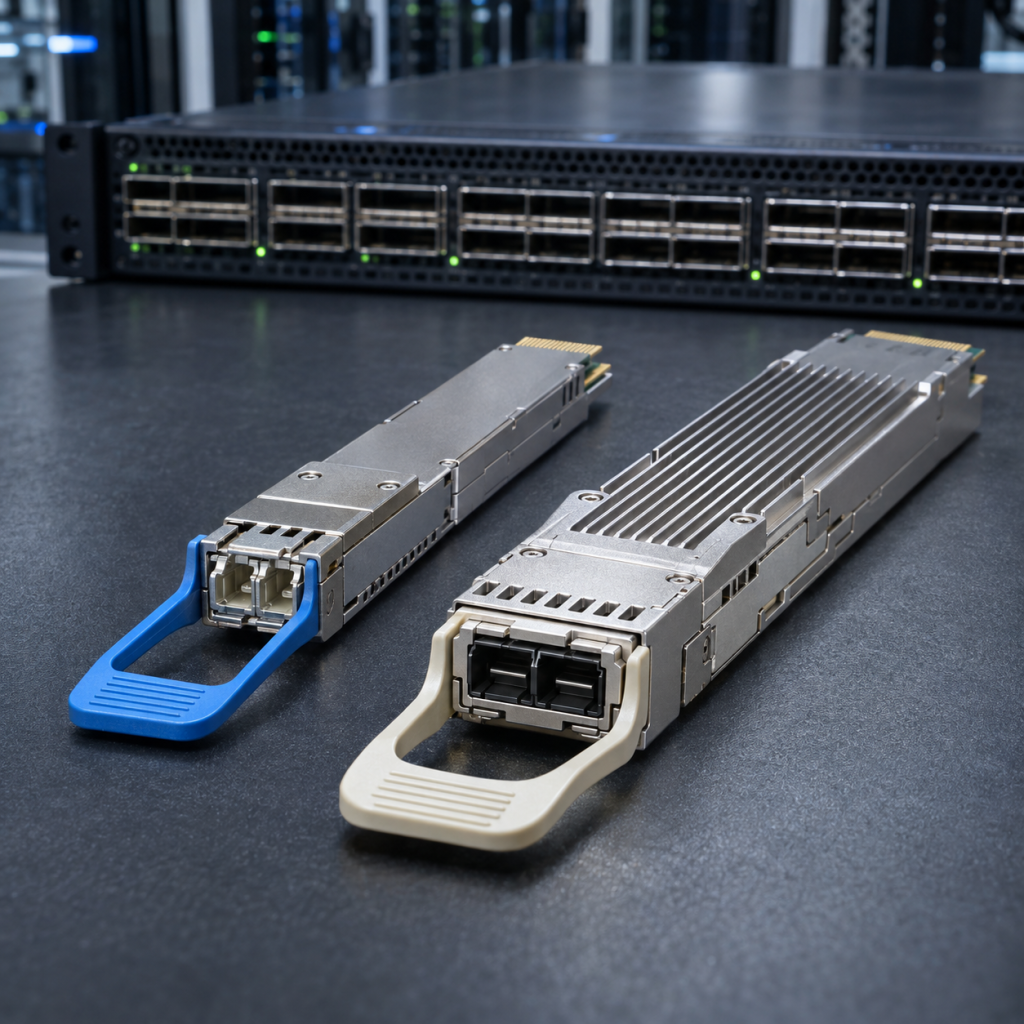
There is no other range in this catalogue where the part number tells you so little and the stakes are so high. MMS4X00-NM and MMS4X00-NM-T differ by two characters. MMA4Z00-NS-T and MMA4Z00-NS-FLT differ by two more. In each pair the optics are the same and something that decides whether the module physically fits, or which […]
XFP transceivers: the 10G form factor that lost, and why you still need it
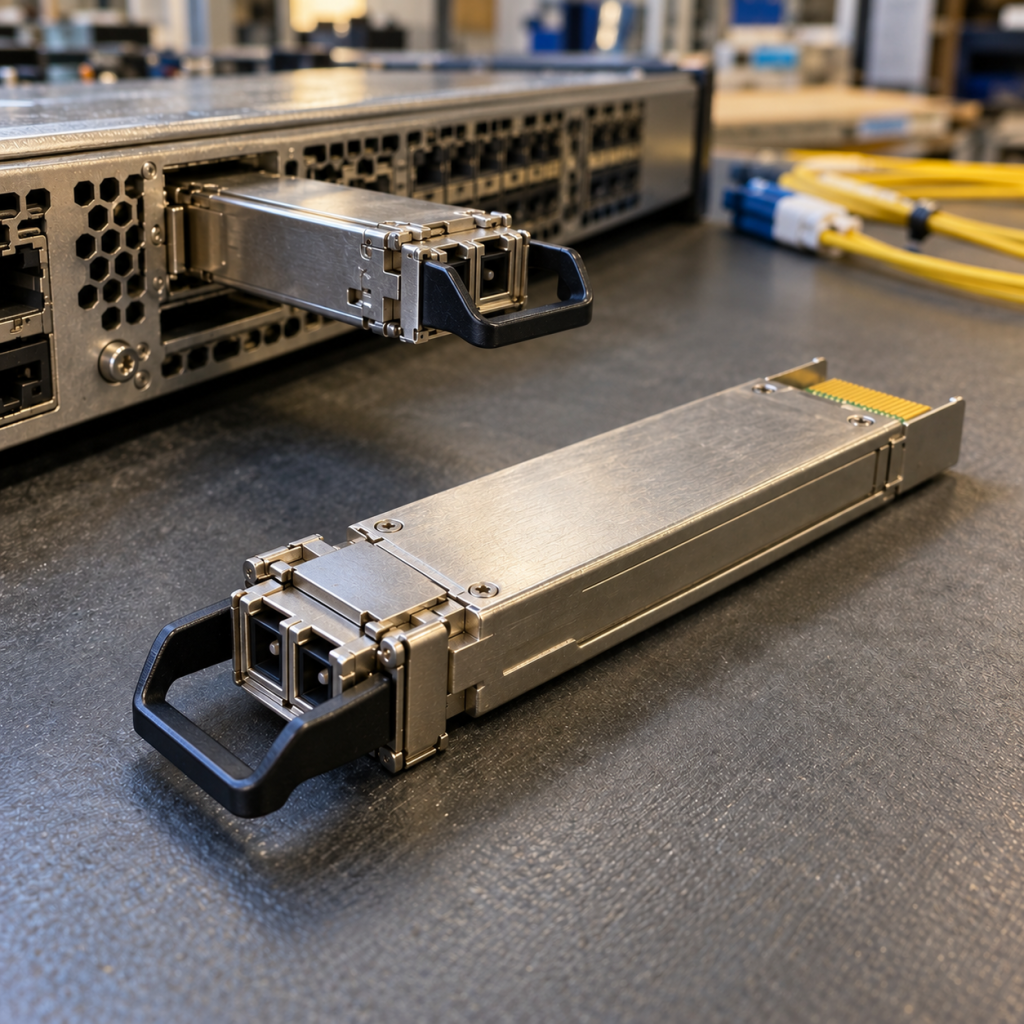
XFP is the form factor that did everything right and lost anyway. It arrived first, it was multi-protocol from the outset, it worked across a wider range of host platforms than its successor, and it is still carrying 10 gigabits in core routers, SDH and OTN transport shelves and firewall clusters across Europe. It also […]
1.25G CWDM and DWDM SFP: putting more links on the fibre you already own
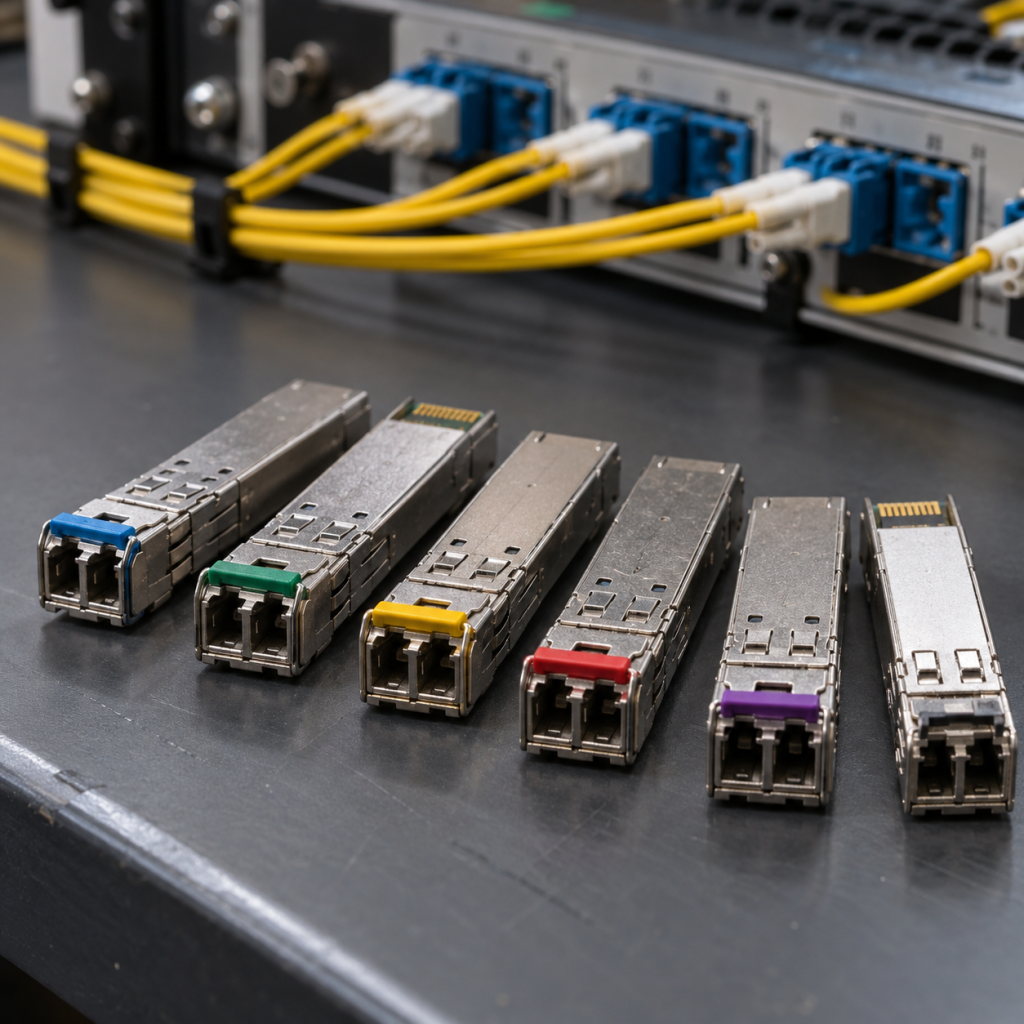
A gigabit is not a lot of bandwidth in 2026. It is, however, exactly what an enormous amount of real infrastructure runs on: substation telemetry, rail signalling, traffic systems, CCTV backhaul, municipal networks, business access tails, and the thousands of SDH and access shelves that still underpin European telecoms. In those networks the constraint is […]
DAC and AOC cables: what to buy when optics are the wrong answer
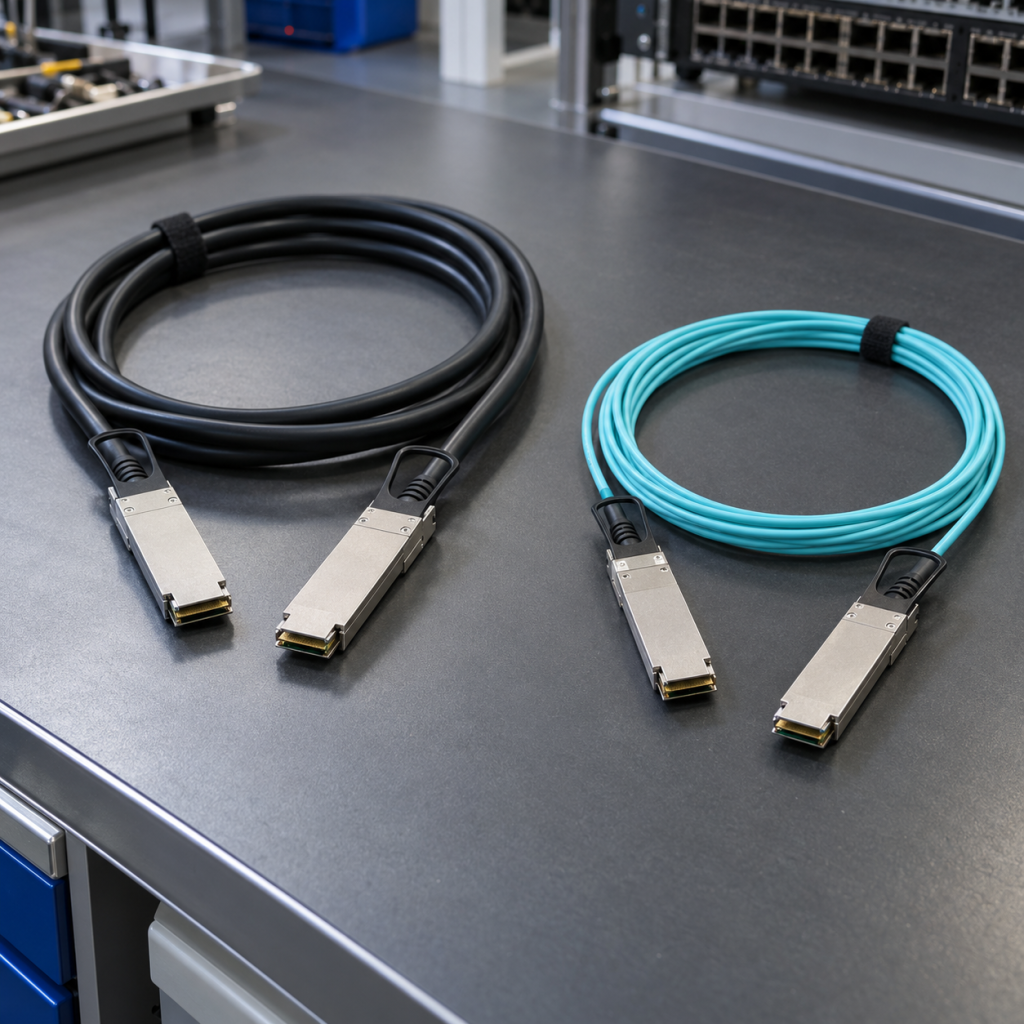
Almost every buying guide on this site ends the same way: inside the rack, do not buy optics at all. This is the article that says what to buy instead. The reasoning is hard to argue with. Two transceivers and a patch lead cost more than a cable, draw between two and forty watts depending […]
HPE and Aruba compatible optics: reading the J, JD, JL and R part numbers
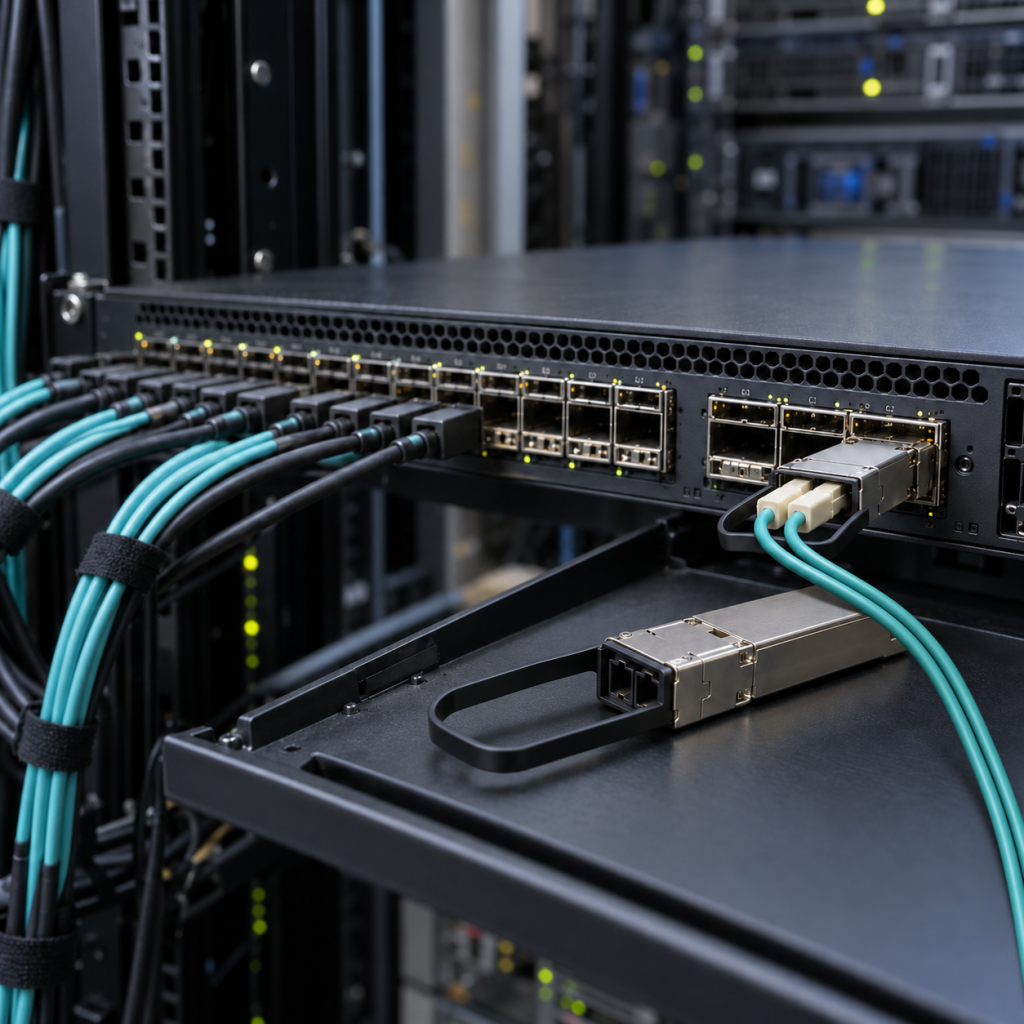
No vendor’s optical part numbers carry more history than HPE’s. A single network closet can hold a J-series module bought when the brand was ProCurve, a JD part that arrived through the 3Com acquisition, a JL part from the Aruba era, an R or S part from HPE Networking, a P-series FC optic from the […]