As network traffic continues to grow, many organisations are looking for ways to increase capacity without immediately jumping into a full 400G or 800G migration. For data centres, telecom operators, cloud environments and enterprise networks, 200G connectivity can provide a practical middle step between established 100G infrastructure and next-generation high-speed optical networks.
200G transceivers can help organisations increase bandwidth, improve port efficiency and support higher-density network designs, while still allowing a measured and controlled upgrade strategy. Rather than treating 200G as a short-term stepping stone, many networks can use it as a valuable capacity layer for aggregation, interconnect, server access and high-performance switching applications.
In this article, we look at where 200G QSFP-DD transceivers fit, why they are useful, and how Carritech Optics can support organisations looking to expand high-speed optical connectivity.
What are 200G QSFP-DD transceivers?
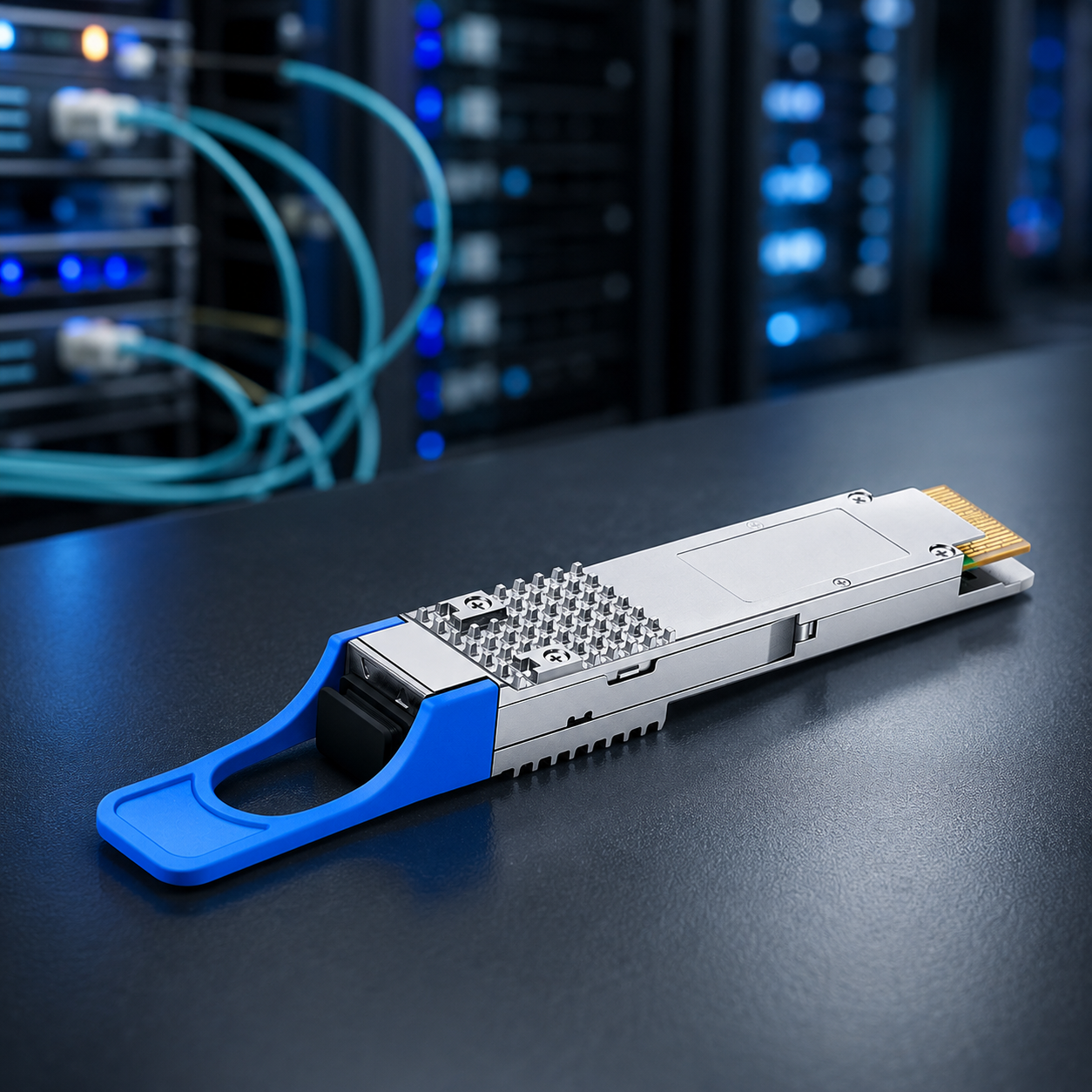
200G QSFP-DD transceivers are optical modules designed to deliver 200Gbps connectivity in a compact QSFP-DD form factor. QSFP-DD stands for Quad Small Form Factor Pluggable Double Density. The format was developed to support higher-density networking by increasing the number of electrical lanes available within a compact pluggable module design.
The QSFP-DD form factor is widely associated with high-speed Ethernet applications and is commonly used across modern data centre and telecom network environments. You can learn more about the QSFP-DD specification from the QSFP-DD MSA.
For network teams, the key benefit is simple: 200G QSFP-DD modules offer a way to increase capacity while maintaining a compact, scalable platform for future growth.
Why 200G matters in modern network upgrades
Many organisations already operate a mix of 10G, 25G, 40G and 100G links. As traffic demands increase, those links can become bottlenecks, especially in environments handling cloud services, storage, virtualisation, AI workloads, video, data replication or high-volume customer traffic.
Moving directly from 100G to 400G is not always necessary or practical. Some networks do not yet need that level of capacity across every link. Others may have budget, platform, fibre or compatibility constraints that make a phased approach more sensible.
200G can provide a useful balance. It allows organisations to double the capacity of a 100G link while keeping the upgrade more manageable than a full 400G refresh. This makes it particularly useful for aggregation links, switch-to-switch connections, spine-leaf architectures, data centre interconnects and high-bandwidth internal network paths.
Where 200G QSFP-DD transceivers are commonly used
200G transceivers can support a wide range of high-capacity applications, including:
- Data centre switch interconnects
- Spine-leaf network architectures
- Cloud infrastructure and virtualised environments
- High-bandwidth enterprise networks
- Telecom aggregation networks
- Storage and backup networks
- Short-reach multimode fibre links
- High-density rack and cabinet connectivity
- Network upgrade projects moving beyond 100G
Because different network environments have different reach, fibre and performance requirements, choosing the correct 200G product is important. A short-reach multimode connection inside a data centre has very different requirements from a longer-reach single-mode fibre route between facilities.
200G as a bridge between 100G and 400G
One of the strongest use cases for 200G is its role as a bridge between 100G and 400G networking. Many organisations have invested heavily in 100G infrastructure and are not ready to replace large parts of their network immediately. At the same time, demand continues to grow.
200G allows network teams to increase capacity in selected areas without treating the upgrade as an all-or-nothing project. For example, a network may continue using 100G at the access or distribution layer while introducing 200G at aggregation points where more bandwidth is required.
This can help organisations reduce congestion, improve headroom and extend the useful life of existing infrastructure. It also gives teams time to plan future 400G or 800G adoption more carefully.
The wider Ethernet ecosystem continues to evolve around higher speeds and greater network scale. The IEEE 802.3 Ethernet Working Group is a useful external reference for how Ethernet standards continue to develop across different speeds and physical layer requirements.
Choosing between 200G optical transceivers, DACs and AOCs
Not every 200G connection needs the same type of product. Depending on distance, cable management, cost and infrastructure requirements, organisations may choose between optical transceivers, direct attach copper cables or active optical cables.
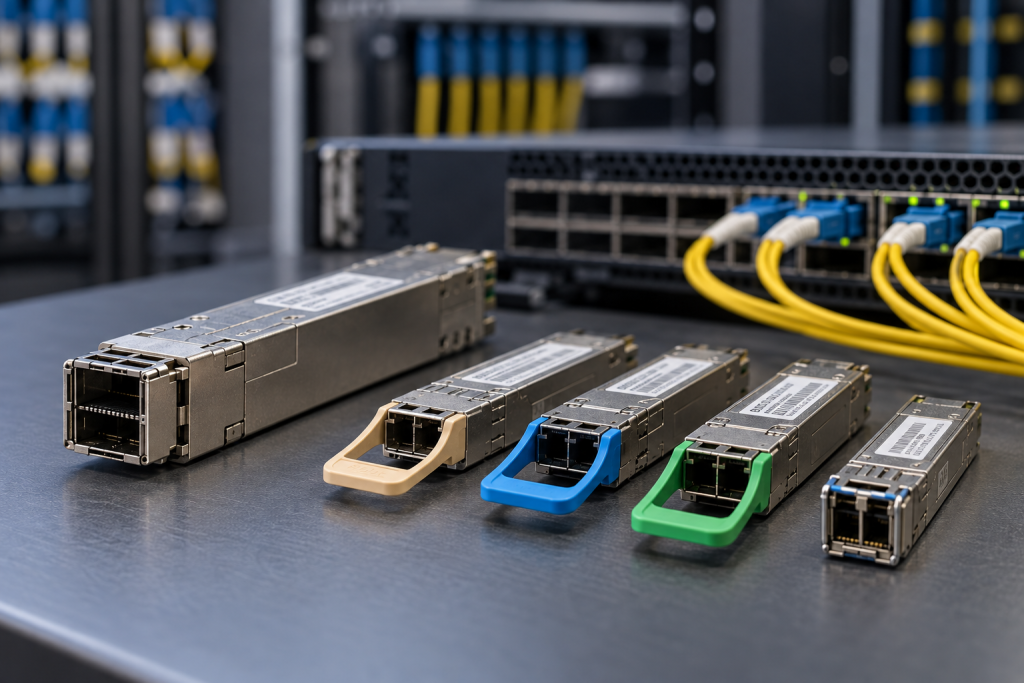
200G QSFP-DD optical transceivers
Optical transceivers are a strong choice when flexibility, replaceable fibre, structured cabling and defined optical reach are important. They are commonly used where the cable route may pass through patch panels, fibre trays or wider site infrastructure.
Carritech Optics supplies 200G QSFP-DD transceivers for high-speed network applications, with options designed to support reliable 200G performance across suitable fibre environments.
200G QSFP-DD 2SR4 transceivers
For short-reach multimode fibre applications, the 200G QSFP-DD 2SR4 is designed for high-performance, multi-lane data communication and interconnect applications. It supports short-range multimode fibre links and is suitable for high-density data centre and switch interconnect environments.
This type of module is particularly relevant where fast, short-distance connectivity is needed between racks, rows or nearby switching equipment. It helps support high-bandwidth connections without relying on longer-reach optics where they are not required.
200G QSFP-DD DAC cables
For very short connections, a direct attach copper cable can be a cost-effective option. Carritech Optics supplies 200G QSFP-DD DAC products for short-distance high-speed connections.
DACs are often used within racks or between closely positioned equipment. They can provide a simple and efficient solution where optical reach is not required and the cable length is short enough for copper connectivity.
200G QSFP-DD AOC cables
Active optical cables can be useful when organisations need a pre-terminated, integrated cable solution for short-range optical connectivity. Carritech Optics supplies 200G QSFP-DD AOC products for high-speed interconnects in short-range communication applications.
AOCs can be a good option where a lighter cable, longer short-range reach or simplified deployment is required compared with copper DACs. They are commonly used in data centre environments where speed, cable management and ease of installation are important.
Important factors when selecting 200G transceivers
Choosing the right 200G transceiver is not only about finding the correct speed. The product must match the network platform, fibre type, distance and operational requirements.
1. Form factor and platform compatibility
Before selecting a module, confirm that the host equipment supports the required QSFP-DD interface and 200G operating mode. Compatibility is particularly important in multi-vendor environments, where different switches, routers and network platforms may have specific coding or firmware expectations.
Carritech Optics provides OEM-compatible optical transceivers designed to integrate across a wide range of network platforms. This helps organisations reduce vendor lock-in and source suitable alternatives for their infrastructure.
2. Fibre type
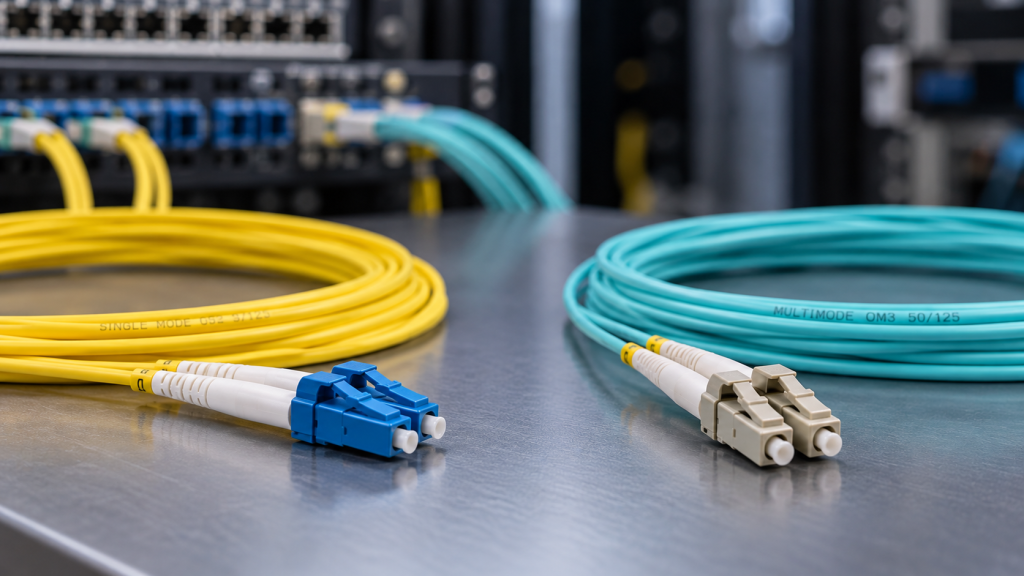
Some 200G modules are designed for multimode fibre, while others are intended for single-mode fibre. Multimode fibre is usually used for shorter connections inside data centres or buildings, while single-mode fibre is used for longer distances and wider network routes.
Choosing the wrong fibre type can prevent a link from working correctly, even if the transceiver speed and form factor appear to be correct.
3. Reach requirement
Distance remains an important factor, but it should be considered alongside link budget, connector loss, patching and fibre condition. A short-reach optic is usually more cost-effective for nearby equipment, while longer-reach optics should be reserved for links that genuinely require them.
4. Connector type
200G modules may use different connector types depending on the optical standard and fibre design. For example, short-reach parallel optics often use MPO connectivity. It is important to check that the connector type matches the planned cabling infrastructure.
5. Power consumption
Power and thermal performance matter in high-density environments. As port speeds rise, rack-level power and cooling considerations become more important. Selecting the correct product helps maintain performance without creating unnecessary thermal pressure inside switches or cabinets.
6. Diagnostics and monitoring
Digital diagnostics can help engineers monitor operating conditions such as optical power, temperature and module status. This can support troubleshooting, preventative maintenance and performance checks across high-speed links.
Why compatibility matters in 200G networks
High-speed transceiver selection is often more complex in multi-vendor networks. A module may meet the right optical specification, but still need to be correctly coded for the host platform. This is especially important when organisations operate equipment from several OEMs or are managing upgrades across different generations of hardware.
Carritech Optics supports this through OEM-compatible optical transceivers and flexible coding options. Our Opticode transceiver coding solution is designed to help organisations reconfigure transceivers for different OEM systems, giving network teams greater flexibility and control.
This can be particularly valuable for organisations that want to standardise purchasing, reduce unnecessary stock duplication and support mixed-platform environments more efficiently.
Common mistakes when upgrading to 200G
Choosing based on speed alone
A 200G module is not automatically suitable just because it matches the desired data rate. Network teams also need to check form factor, fibre type, connector, reach, compatibility and diagnostic requirements.
Using the wrong cable type
DAC, AOC and optical transceiver solutions each have different use cases. A DAC may be ideal for a very short in-rack connection, while an AOC or optical transceiver may be more suitable for longer or more flexible cabling requirements.
Ignoring fibre infrastructure
High-speed optics rely on suitable fibre quality, correct patching and clean connectors. Existing fibre routes should be checked before assuming they are ready for 200G operation.
Overlooking platform support
Not every switch or router that accepts QSFP-DD modules will support every 200G operating mode. Platform documentation and compatibility should always be confirmed.
Failing to plan for future growth
200G can support current capacity requirements, but network teams should also consider where 400G or 800G may be needed in future. A good upgrade plan should support both immediate needs and long-term network direction.
How 200G supports better network scalability
200G transceivers can help organisations scale more efficiently by increasing bandwidth density without immediately redesigning the entire network. This is particularly useful in environments where traffic growth is uneven. Some links may require more capacity now, while others can remain on existing infrastructure until demand increases.
This selective upgrade approach can help reduce unnecessary spend, minimise disruption and give network teams greater control over migration planning.
O Ethernet Alliance Roadmap is a useful external resource for understanding how Ethernet speeds continue to develop in response to cloud, AI, enterprise and next-generation connectivity demands.
Where Carritech Optics can help
Carritech Optics supplies high-quality optical transceivers for telecom operators, data centres, enterprises and network infrastructure providers. Our portfolio includes 200G transceivers, 400G transceivers, 800G transceivers and a wide range of lower-speed products for established network environments.
For organisations looking specifically at 200G connectivity, our product range includes:
- 200G QSFP-DD transceivers
- 200G QSFP-DD 2SR4 optical transceivers
- 200G QSFP-DD DAC cables
- 200G QSFP-DD AOC cables
Our transceivers are supplied with OEM compatibility, short lead times and lifetime warranty support, helping customers source dependable optical networking products for demanding environments.
Final thoughts
200G QSFP-DD transceivers offer a practical and scalable way to increase network capacity without immediately moving every link to 400G or 800G. For many organisations, 200G provides the right balance of speed, density, flexibility and upgrade control.
Whether used for data centre interconnects, aggregation links, switch-to-switch connections or high-bandwidth enterprise environments, the right 200G solution can help improve performance while supporting a phased approach to network growth.
Need help choosing the right 200G transceiver? Carritech Optics can help you identify the right product for your platform, fibre type, distance and compatibility requirements.