Transceiver coding explained: one module, every platform
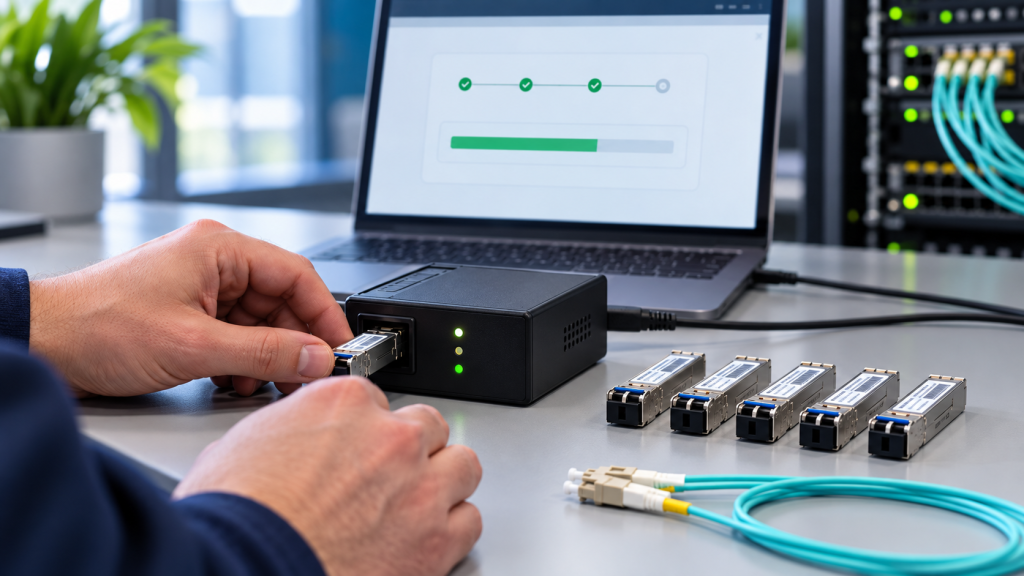
A switch rejecting a perfectly good optic is not an optical fault – it is an identification check. Here is how transceiver coding works, the inventory cost it creates, and how recoding collapses five lines of stock into one.
Do third-party optical transceivers void your warranty?

A compatible transceiver is a standards-built, hot-pluggable module – it does not modify your switch. Here is what OEM warranty terms actually say, what the law says about tie-in conditions, and the four steps that take the objection off the table.
How to spot a failing fibre link before it drops
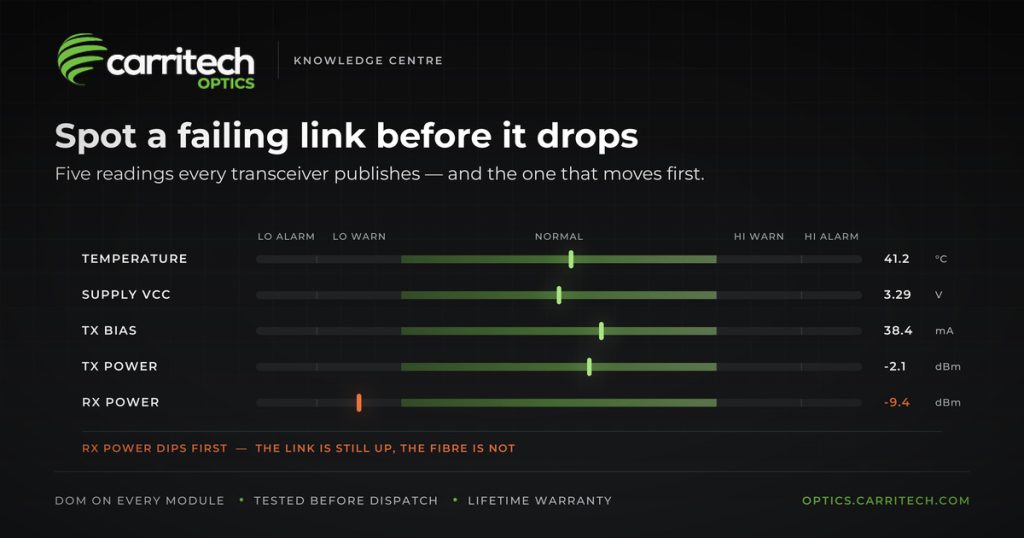
Every transceiver in your network is measuring itself right now and reporting the results. Most networks never look until something has already gone down. That is a missed opportunity, because the most common fibre failure — a connection slowly getting worse — shows warning signs weeks in advance. You just have to know which number […]
MPO polarity explained: Type A, B and C in plain English

MPO polarity has one job: make sure the light leaving one switch arrives at the receiver on the other. Get it wrong and the link stays dark. It sounds complicated because of the naming. It is not. Here is the whole thing. The short answer Building a 400G or 800G link with parallel optics? Use […]
Juniper QFX5120 compatible optics: the full list

Choosing QFX5120 compatible optics is more interesting than it looks. The QFX5120 is the switch a lot of data centre leaf layers ended up standardising on, and two things decide what you can plug into one: which model you have, and — on the 25G models — which group of four ports you are plugging […]
800G and 1.6T migration: what to check before you buy optics

800G is no longer a roadmap slide. The optics ship in volume, two form factors have settled into their ecosystems, and the IEEE standard behind the mainstream variants has been published since 2024. What has not settled is the buying process — because an 800G transceiver migration fails or succeeds on details that never mattered […]
Your optics will go end-of-sale before your switch does

Most people track the end-of-life date on the switch. Almost nobody tracks it on the optic — and the optic usually runs out first. That is not a criticism of anyone. It is a scheduling reality that follows directly from how vendors manage product lifecycles, it is fully published, and once you have seen it […]
Are Compatible Optical Transceivers as Good as OEM?

Every network engineer has heard the warning, usually from a vendor account manager: “third-party optics will take your network down.” It’s a powerful fear. The optic is a £50–£500 part sitting in a £50,000 switch, carrying traffic your whole business depends on — and if it fails at 2am, nobody wants to be the person […]
OEM Compatible vs OEM Branded Optical Transceivers: Which Delivers Better Value for Modern Networks?

As network demand continues to grow, optical transceivers have become one of the most important components in modern telecom, enterprise and data centre environments. Whether a network is being expanded, upgraded or maintained, choosing the right fibre module can have a direct impact on cost, performance, lead times and long-term flexibility. One of the most […]