Fibre Channel transceivers: 16G, 32G and the SAN optics that actually fit
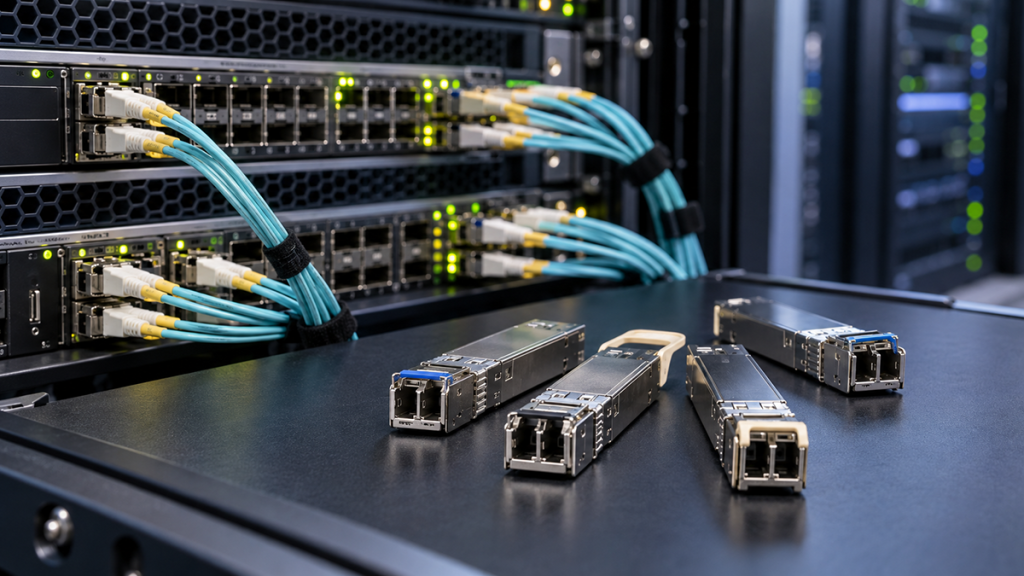
Fibre Channel transceivers explained: SW and LW, real reach by OM grade, the two-generation negotiation rule, mandatory FEC at 32G and vendor coding.
Nokia compatible optics: decoding 3HE part numbers and the platforms they fit

Nokia compatible optics explained: what a 3HE part number does and does not tell you, which platform takes which form factor, and the tested modules for each.
Optical transceiver power consumption: what each port really costs to run

Optical transceiver power consumption by speed, from under 1W at 10G to 26W for 800G coherent. Power classes, the cooling multiplier and how to cut it.
Fibre optic connector cleaning: the fault that looks like a failed transceiver

A link is flapping. Receive power is 4 dB down on where it was commissioned. Someone swaps the transceiver, and it makes no difference. Someone swaps it again, for a different brand this time, and it still makes no difference. Two hours and three modules later, someone cleans the connector — and the link comes […]
Arista compatible optics: reading the part numbers and getting the right module

Arista part numbers are unusually readable once you know the pattern — which is fortunate, because an Arista estate typically spans four generations of platform and five or six optical speeds, and the difference between two similar-looking part numbers is often the thing that decides whether a port comes up. This guide covers how Arista […]
400ZR vs OpenZR+: coherent optics for data centre interconnect
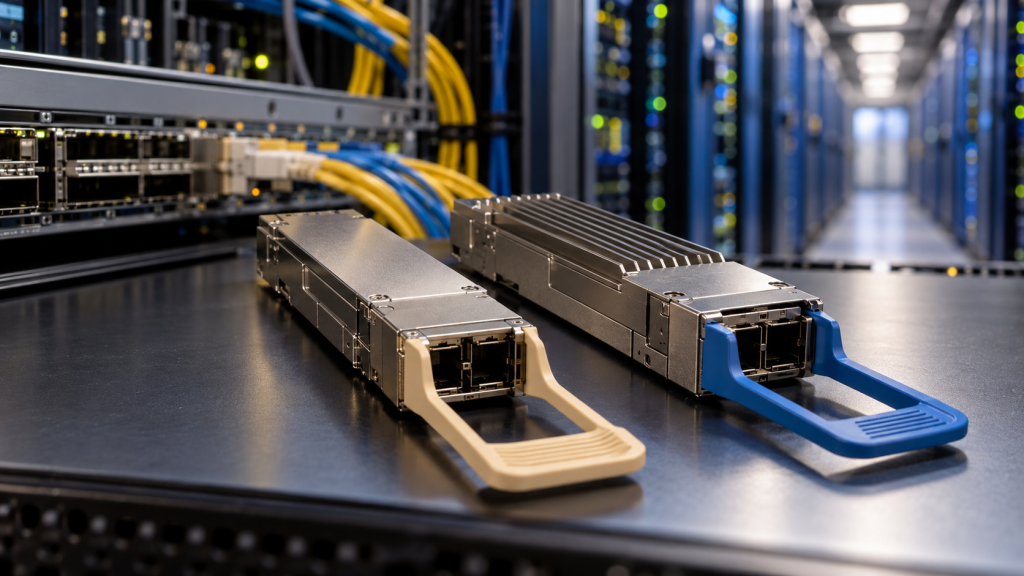
For twenty years, moving 400G between two data centres 80 km apart meant buying a transponder. A separate chassis, its own power feed, its own management system, its own team who understood it. The router handed off a grey client signal, the transponder turned it into a coloured DWDM wavelength, and you paid for the […]
Single-mode vs multimode fibre: choosing the right transceiver
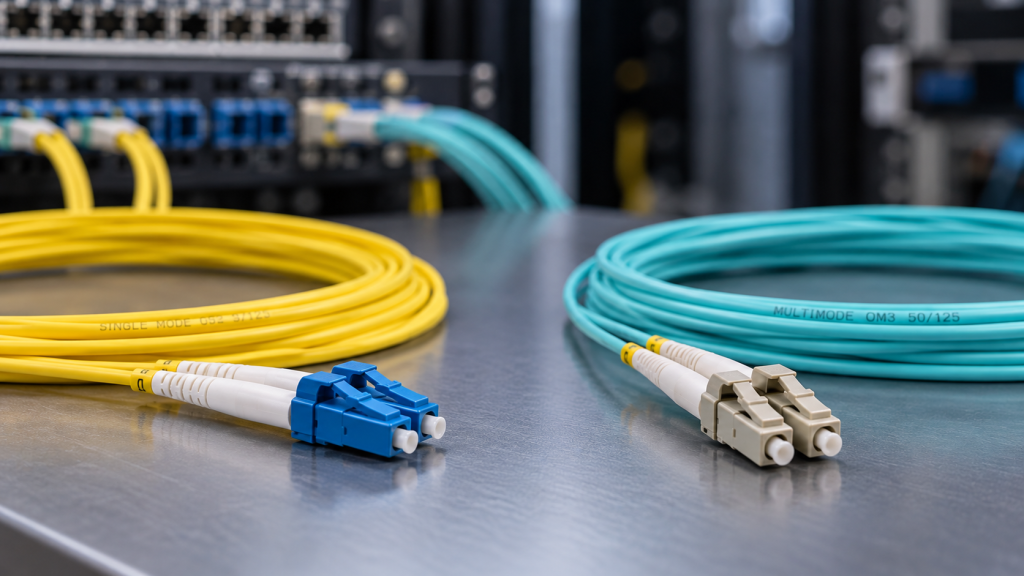
The cabling is already in the ground, the switch ports are ready, and someone has to decide which optics to order. Get the fibre type wrong and the link either will not come up at all, or it comes up and fails intermittently in a way that costs a week to diagnose. Single-mode or multimode […]
400G breakout explained: 4x100G, 2x200G and when to use it
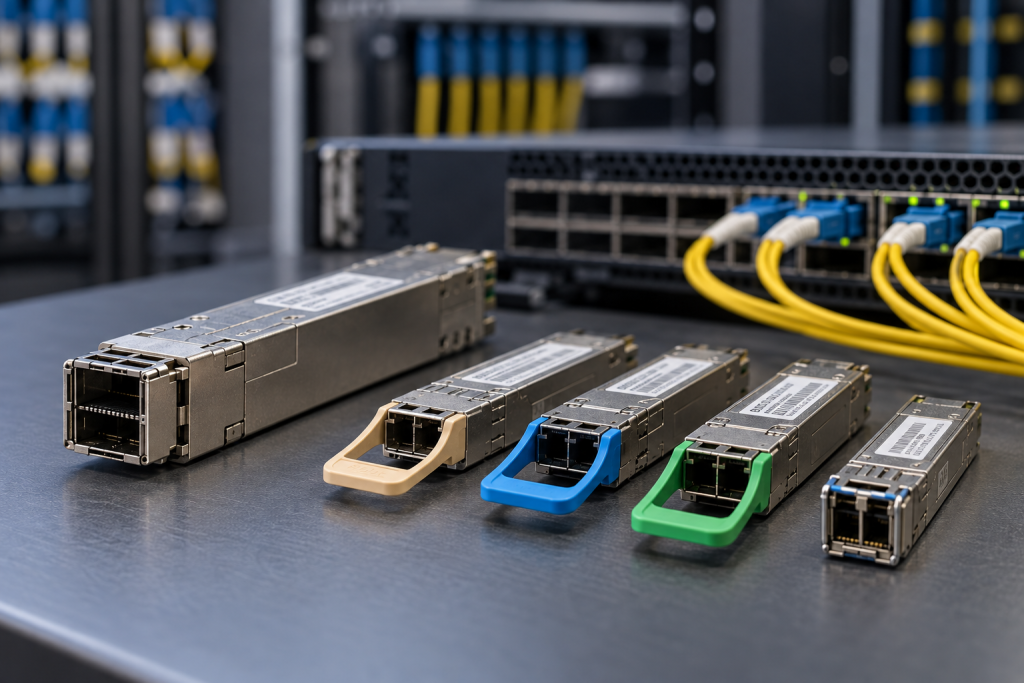
A 400G switch port is expensive, and most of the servers and leaf switches you want to connect to it do not run at 400G. Breakout is how you stop wasting the difference: one 400G port becomes four 100G links, or two 200G links, and suddenly the port density on that line card makes financial […]
CWDM vs DWDM: which one does your network actually need?

You have two sites, one pair of fibres between them, and a lot more traffic than that fibre currently carries. Wavelength division multiplexing is how you get more out of the strands you already have — and the first decision is CWDM or DWDM. They solve the same problem in very different ways. CWDM is […]
QSFP-DD vs OSFP: choosing the right 400G and 800G form factor
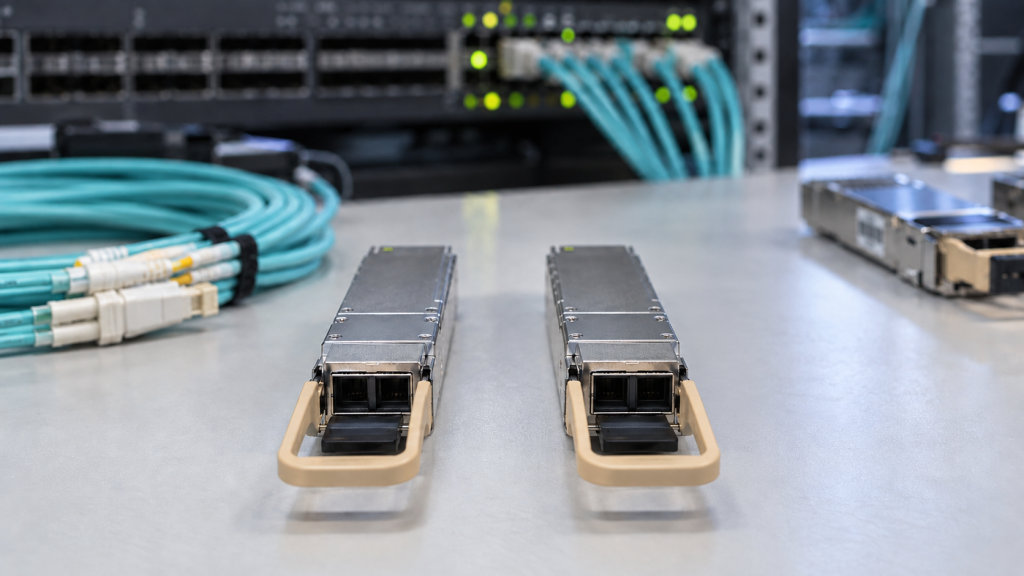
Same headline speeds, very different decisions. QSFP-DD vs OSFP compared on electrical lanes, thermal headroom, backwards compatibility and the roadmap past 800G – plus the five things to check before you order.