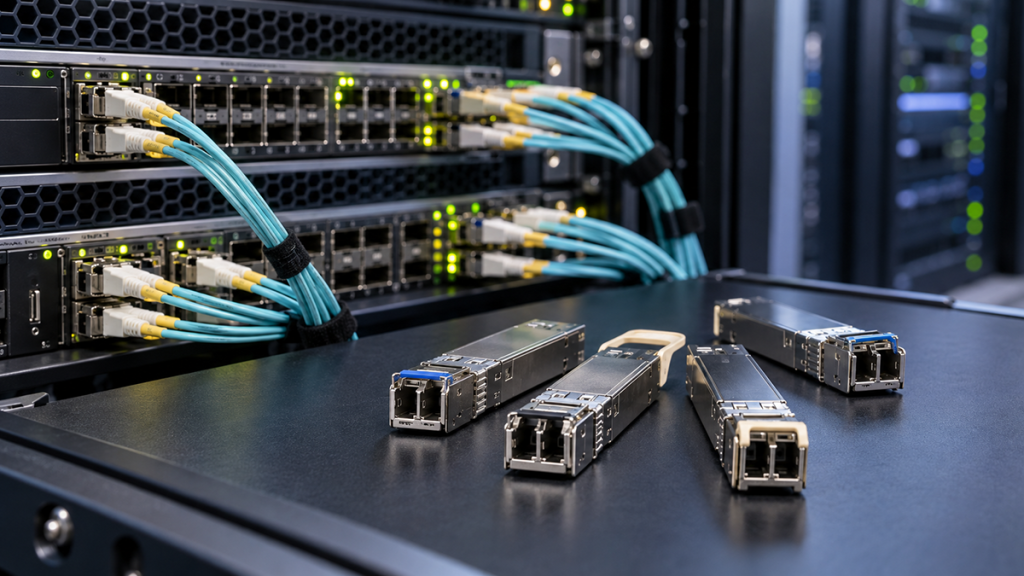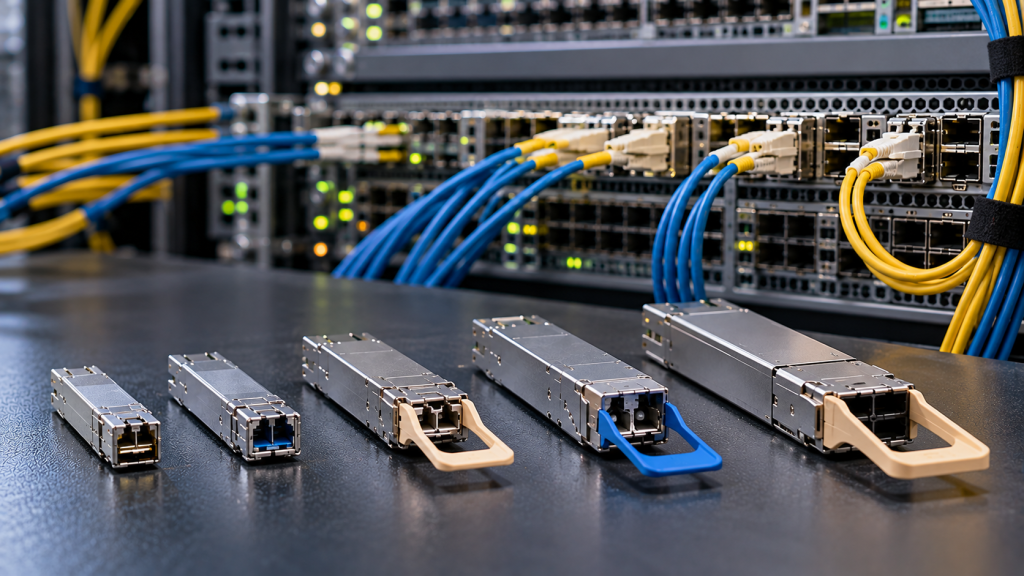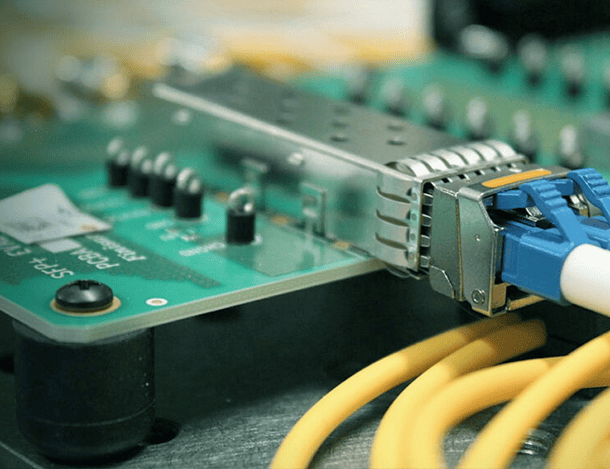
Quando si investe nell'infrastruttura di rete, una delle domande più comuni che gli operatori si pongono è se acquistare ricetrasmettitori ottici OEM o alternative compatibili. La decisione influisce su costi, prestazioni, considerazioni sulla garanzia e sulla strategia di rete a lungo termine.
In questa guida, confrontiamo Ricetrasmettitori ottici OEM e compatibili per costi, rischi, prestazioni e valore del ciclo di vita, aiutando gli ingegneri di rete e i team di acquisto a prendere una decisione informata.
Cosa sono i ricetrasmettitori ottici OEM?
I ricetrasmettitori ottici OEM (Original Equipment Manufacturer) sono forniti direttamente dal fornitore dello switch o del router, come Cisco, Juniper, Nokia o Huawei, e hanno il marchio e il prezzo corrispondenti.
In genere sono:
- Bloccati su piattaforme di fornitori specifici
- Venduto a prezzo maggiorato
- Coperto dalle politiche di supporto dell'OEM
Per molte organizzazioni, le ottiche OEM sono la scelta predefinita, in particolare negli ambienti in cui la conformità alla politica del fornitore è rigorosamente imposta.
Cosa sono i ricetrasmettitori ottici compatibili?
I ricetrasmettitori ottici compatibili sono progettati per corrispondere alle specifiche degli OEM e offrire interoperabilità con le stesse piattaforme di rete. Sono programmati e testati per funzionare senza problemi con gli switch e i router supportati.
Moduli compatibili di alta qualità:
- Soddisfare o superare le specifiche tecniche degli OEM
- Sottoposti a un'ampia convalida di compatibilità
- Supporto degli stessi standard di velocità, distanza e fattore di forma
- Offrono vantaggi significativi in termini di costi
La differenza principale non sta nella funzionalità, ma nel branding e nella struttura dei prezzi.
Confronto dei costi: Ricetrasmettitori ottici OEM e compatibili
Uno dei fattori di differenziazione più significativi è il prezzo.
I moduli ottici OEM hanno in genere un prezzo notevolmente superiore. In molti casi, le organizzazioni pagano multipli del prezzo del modulo compatibile equivalente per specifiche tecniche identiche.
I ricetrasmettitori ottici compatibili possono ridurre drasticamente la spesa di capitale, spesso di 40-70% a seconda della velocità e del fattore di forma, senza compromettere le prestazioni della rete.
Per le implementazioni ad alta velocità, come gli ambienti 100G, 400G e gli emergenti 800G, questa differenza diventa significativa dal punto di vista commerciale.
Prestazioni: C'è differenza?
Da un punto di vista tecnico, le prestazioni sono determinate da:
- Potenza ottica in uscita
- Integrità del segnale
- Capacità di distanza
- Conformità agli standard industriali (MSA)
- Monitoraggio diagnostico digitale (DDM/DOM)
I ricetrasmettitori di qualità compatibili sono costruiti secondo gli standard MSA e rigorosamente testati per garantire interoperabilità e stabilità.
In pratica, se correttamente progettati e convalidati, i ricetrasmettitori ottici compatibili offrono prestazioni operative identiche a quelle degli equivalenti OEM.
Considerazioni sul rischio
La percezione del rischio è spesso la principale esitazione nella scelta di un'ottica compatibile.
Le preoccupazioni più comuni includono:
- Implicazioni della garanzia
- Errori di compatibilità degli interruttori
- Affidabilità a lungo termine
- Aggiornamenti del firmware o della piattaforma
Questi rischi possono essere mitigati quando si acquista da un fornitore che:
- Conduce test di compatibilità specifici per la piattaforma
- Fornisce una chiara copertura della garanzia
- Offre supporto per la convalida tecnica
- Mantenimento di un rigoroso controllo di qualità e test di rodaggio
La scelta di un fornitore affidabile è fondamentale. Non tutte le ottiche compatibili sono uguali.
Garanzia e assistenza
I moduli OEM sono supportati dai contratti di manutenzione del fornitore.
Le ottiche compatibili, se fornite da fornitori affermati, sono coperte da garanzie indipendenti, spesso a vita, e da assistenza tecnica.
Per molte organizzazioni, separare l'acquisto di materiale ottico dalla manutenzione dell'hardware di base consente una maggiore flessibilità senza compromettere la resilienza della rete.
Quando ha senso l'OEM?
Le ottiche OEM possono essere appropriate quando:
- I contratti con i fornitori impongono componenti solo OEM
- Gli ambienti richiedono un rigoroso allineamento del produttore
- La politica interna vieta l'hardware di terze parti
Tuttavia, questi scenari stanno diventando meno comuni con l'evoluzione delle reti e l'aumento della pressione sui costi.
Quando le ottiche compatibili hanno un senso strategico
I ricetrasmettitori ottici compatibili sono particolarmente vantaggiosi quando:
- Scalare le interconnessioni ad alta velocità dei data center
- Gestione di ambienti multi-vendor
- Estensione della vita delle piattaforme legacy
- Controllo dei costi di aggiornamento per l'ottica
- Costruire una strategia di risparmio efficiente in termini di costi
Per gli operatori che implementano grandi volumi di moduli da 10G, 25G, 100G o 400G, i risparmi si moltiplicano rapidamente.
Il bilancio
Il dibattito tra ricetrasmettitori ottici OEM e compatibili non è più puramente tecnico, ma strategico.
Grazie ai moderni standard di produzione, ai test rigorosi e ai processi di convalida della piattaforma, le ottiche compatibili di alta qualità sono in grado di eguagliare le prestazioni degli OEM riducendo significativamente i costi.
La chiave non è scegliere “OEM vs. compatibile”, ma scegliere il fornitore giusto.
Cercate ricetrasmettitori ottici compatibili? In Carritech Optics, tutti i ricetrasmettitori ottici compatibili sono:
- Progettato per soddisfare le specifiche OEM
- Piattaforma testata per la compatibilità
- Supportati da un'assistenza completa in garanzia
- Disponibile in un'ampia gamma di velocità, tra cui 10G, 25G, 100G, 400G e 800G.
Se state valutando i ricetrasmettitori ottici OEM rispetto a quelli compatibili per la vostra prossima implementazione, il nostro team può aiutarvi a valutare la compatibilità, il potenziale di risparmio e i requisiti di implementazione.