Data centres are being pushed harder than ever. Artificial intelligence, machine learning, cloud platforms, high-performance computing and real-time digital services are all creating huge increases in bandwidth demand. As a result, network operators are having to rethink how they design, scale and future-proof their infrastructure.
For many organisations, 100G, 200G and 400G networks have already become essential. But as traffic continues to grow, the next major step is already here: 800G networking.
At the heart of this transition are next-generation optical transceivers. These compact modules make it possible to move significantly more data through the network while supporting the density, efficiency and scalability required by modern data centre environments.
In this article, we look at why 800G is becoming increasingly important, how optical transceivers are enabling the shift, and what network teams should consider when preparing for higher-speed infrastructure.
Why data centres are moving towards 800G
Data centre traffic has changed dramatically in recent years. It is no longer only about connecting users to applications. Modern data centres now need to support large-scale east-west traffic between servers, storage, switches and compute clusters.
This is especially important in AI and machine learning environments, where large numbers of GPUs and accelerators need to exchange data continuously. The performance of these workloads depends not only on compute power, but also on the speed and reliability of the network connecting that compute together.
The wider Ethernet industry has recognised this shift. The IEEE has highlighted 800G Ethernet as the next major step in Ethernet evolution, while the Ethernet Alliance notes that 800G provides double the bandwidth of 400G and plays an important role in future high-speed interconnects.
For data centres, this means higher capacity, improved scalability and fewer physical links required to achieve the same total throughput. Instead of deploying multiple lower-speed links to meet growing bandwidth demand, data centres can use 800G OSFP optical transceivers to increase per-port capacity, simplify cabling and support greater network density.
What is an 800G optical transceiver?
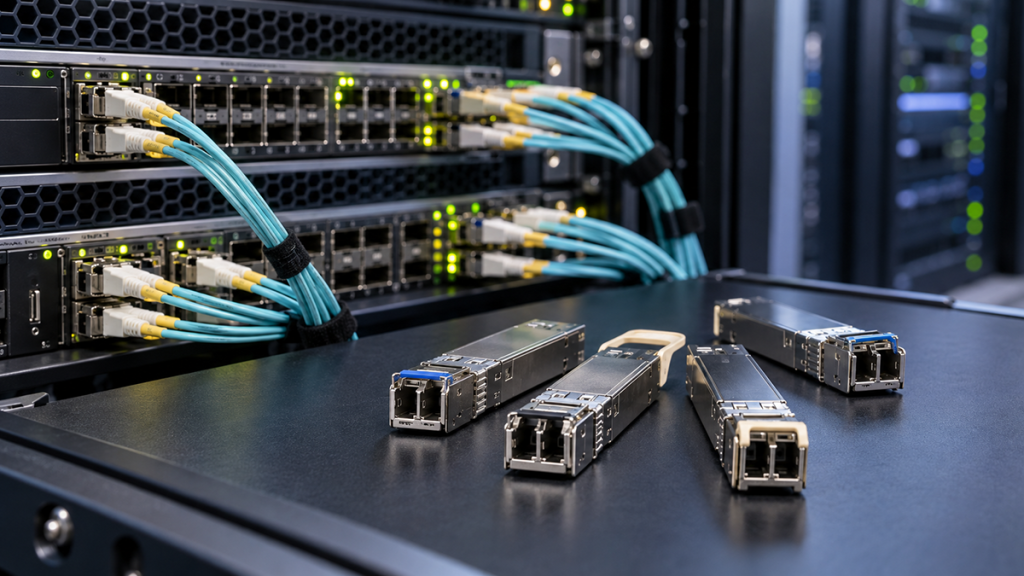
An 800G optical transceiver is a high-speed pluggable module designed to transmit and receive data at up to 800 gigabits per second. It converts electrical signals from network equipment into optical signals that can travel over fibre, then converts received optical signals back into electrical signals.
Different 800G transceivers are designed for different reach, fibre and network requirements. These may include short-reach links inside the data hall, medium-distance connections between switches, or longer-reach data centre interconnect applications.
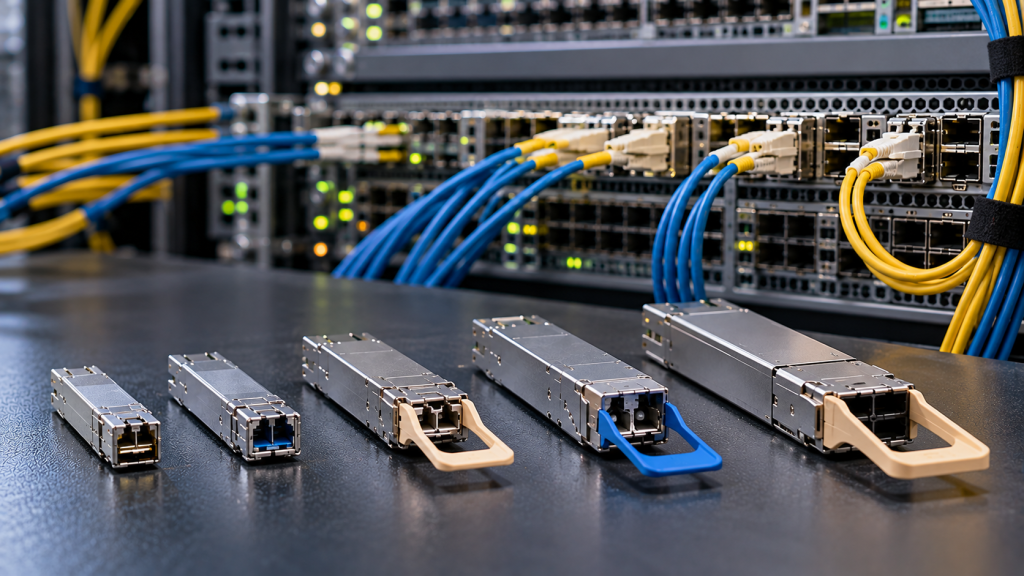
Common 800G form factors include OSFP and QSFP-DD. OSFP, which stands for Octal Small Form-factor Pluggable, is widely used for high-speed, high-density data centre applications because it supports the thermal and electrical requirements of 800G networking.
Carritech Optics supplies a growing range of 800G OSFP optical transceivers, supporting high-capacity applications where performance, compatibility and lead time are critical.
How 800G transceivers transform data centre design
The move to 800G is not just a speed upgrade. It changes how network architects think about capacity, cabling, switch port utilisation and future scalability.
1. Higher bandwidth per port
The most obvious benefit of 800G is higher throughput. By doubling the capacity of 400G links, 800G allows data centres to support more traffic without doubling the number of ports, cables or modules.
This is particularly valuable in spine-leaf architectures, where uplink capacity can quickly become a limiting factor. Higher-speed optical links allow operators to increase fabric capacity while maintaining a cleaner and more scalable physical design.
2. Improved network density
Data centre space is expensive. Rack space, cable pathways, patching areas and power availability all need to be managed carefully. Using higher-speed transceivers helps improve bandwidth density by delivering more capacity from each switch port.
For hyperscale, cloud and AI environments, this density matters. As server and accelerator clusters grow, the network needs to scale without becoming physically unmanageable. This is why many operators are now planning networks that use a combination of 400G QSFP-DD and 800G OSFP modules as part of their wider upgrade path.
3. Reduced cabling complexity
As speeds increase, cabling strategy becomes more important. 800G transceivers can help reduce the number of separate links needed for high-capacity connections, which can simplify cable management and reduce the risk of patching errors.
However, this also means that fibre type, connector type, breakout requirements and reach must be planned carefully. Choosing the wrong module can create unnecessary complexity or limit future upgrade paths.
4. Better support for AI and high-performance workloads
AI workloads place intense pressure on data centre networks. Training and inference environments often require fast, low-latency communication between large numbers of compute nodes. If the network becomes a bottleneck, the performance of expensive compute infrastructure can be reduced.
Alongside the network, power and cooling requirements are also becoming more demanding. The Uptime Institute has discussed how AI training environments are creating increasingly complex density challenges for data centre operators.
800G networking helps support these environments by increasing available bandwidth between critical parts of the infrastructure. This can improve the efficiency of GPU clusters, storage fabrics and high-performance computing environments.
5. A pathway towards 1.6T networking
800G is also an important stepping stone towards even faster Ethernet speeds. The industry is already preparing for 1.6T networking, and many of the technologies being used for 800G will help shape the next generation of optical connectivity.
For organisations planning long-term data centre upgrades, this means 800G should be viewed not only as a capacity increase, but also as part of a broader roadmap towards next-generation network infrastructure.
Key 800G transceiver types and applications
Not all 800G transceivers are the same. The right choice depends on reach, fibre type, switch compatibility and application.
800G SR8
800G OSFP SR8 transceivers are typically used for short-reach multimode fibre connections within the data centre. They are suited to high-speed links over relatively short distances, such as switch-to-switch or switch-to-server connections within the same facility.
800G DR8
800G OSFP DR8 transceivers are commonly used over single-mode fibre for high-capacity data centre links. They are often used where higher performance and longer reach are required compared with short-reach multimode options.
800G FR and LR options
For longer data centre and campus environments, FR and LR variants can support greater distances over single-mode fibre. These are useful where network equipment is spread across larger facilities or connected between buildings.
800G ZR and coherent optics
For data centre interconnect, coherent 800G technologies such as 800ZR and 800LR are important because they support high-capacity links over longer distances. The Optical Internetworking Forum develops implementation agreements that support interoperability across optical networking technologies, including coherent interface specifications.
When planning an 800G deployment, network teams should consider not only the speed, but also the required distance, fibre infrastructure, connector type, power budget and compatibility with existing equipment.
Compatibility is critical in 800G deployments
As transceiver speeds increase, compatibility becomes even more important. High-speed optics must work correctly with the host platform, switch operating system, firmware and monitoring environment.
An incompatible module can lead to link instability, incorrect diagnostics, unsupported module warnings or complete failure to establish a connection. In high-capacity data centre environments, these issues can create unnecessary risk and delay.
This is why Carritech Optics focuses on compatible, programmable and tested optical transceivers for major network equipment platforms. Our transceivers are supplied to support a wide range of vendors, helping customers deploy high-speed connectivity without being locked into expensive OEM-branded optics.
If you are unsure which module is suitable for your platform, Carritech Optics can help you check compatibility before you buy. Use our optical transceiver compatibility checker to confirm the right module for your network equipment.
Preparing your data centre for 800G
Before moving to 800G, organisations should take a structured approach. The transceiver is only one part of the wider network environment.
Review current and future bandwidth demand
Start by understanding where the pressure is coming from. Is traffic growth being driven by AI workloads, cloud expansion, storage replication, customer demand or inter-data centre connectivity? This will help define where 800G delivers the strongest return.
Check switch and platform support
Not every platform supports 800G, and support can vary depending on line card, software version and port configuration. It is important to confirm the technical requirements before ordering modules.
Carritech Optics supplies optical transceivers designed to work across a wide range of major OEM platforms. If you are planning a migration or validating an equipment list, the compatibility check is a practical first step.
Assess your fibre infrastructure
800G deployment may require specific fibre types, connector formats and polarity arrangements. Existing fibre may be suitable in some cases, but other environments may require upgrades or reconfiguration.
Plan for power and cooling
Higher-speed optics can have higher power and thermal requirements. Data centre teams should consider port density, airflow and operating conditions when planning 800G rollouts.
Consider breakout and migration options
Many organisations will not move directly from lower speeds to a fully 800G environment. Breakout options can support phased upgrades, allowing operators to connect 800G ports to multiple lower-speed links where needed.
This can be useful when migrating from existing 200G QSFP-DD transceivers or 400G QSFP-DD transceivers towards higher-capacity architectures.
The role of compatible optics in reducing upgrade costs
One of the biggest challenges in high-speed networking is cost. As data centres scale, the number of optical modules required can become significant. Relying only on OEM-branded optics can make large upgrades more expensive than necessary.
Compatible optical transceivers offer a practical alternative. When correctly coded, tested and supplied by a trusted provider, compatible optics can deliver the performance and reliability required for modern networks while helping reduce the total cost of deployment.
This is particularly important for 800G projects, where the cost per module can have a major impact on the overall project budget.
Carritech Optics provides high-performance optical transceivers designed to support modern data centre, telecom and enterprise networks. Our range includes 200G QSFP-DD, 400G QSFP-DD and 800G OSFP transceivers, helping customers choose the right solution for each stage of their network upgrade.
For mixed-vendor environments, Carritech’s Opticode transceiver coding box can also help organisations reprogram compatible optics across different network platforms, giving teams greater flexibility when managing stock, spares and changing network requirements.
800G is not just for hyperscalers
Although 800G is often associated with hyperscale cloud and AI data centres, its relevance is expanding. Large enterprises, telecom operators, research networks, financial platforms and content providers may all face similar bandwidth challenges.
Any organisation dealing with rapid traffic growth, high-density compute, low-latency applications or large-scale data movement should start considering where 800G may fit into its long-term network strategy.
That does not mean every network needs to move to 800G immediately. In many cases, a phased approach using a mix of 100G, 200G, 400G and 800G optics will be the most practical route. The key is to plan with future capacity in mind, rather than waiting until the existing network becomes a bottleneck.
Final thoughts
800G networking represents a major step forward for data centre connectivity. It delivers the higher bandwidth, density and scalability needed to support AI, cloud, high-performance computing and next-generation digital services.
However, successful deployment depends on more than simply selecting the fastest module. Network teams need to consider compatibility, reach, fibre infrastructure, power requirements, platform support and long-term upgrade strategy.
With the right optical transceivers and the right compatibility guidance, organisations can prepare their data centres for the next generation of network demand while controlling cost and reducing deployment risk.
Need help choosing the right 800G transceiver?
Carritech Optics supplies compatible, programmable and tested optical transceivers for major network platforms, including Cisco, Juniper, Nokia, Huawei, Arista, Dell, HPE and more.
Browse our 800G OSFP transceivers or request a compatibility check to confirm the right module for your network equipment.