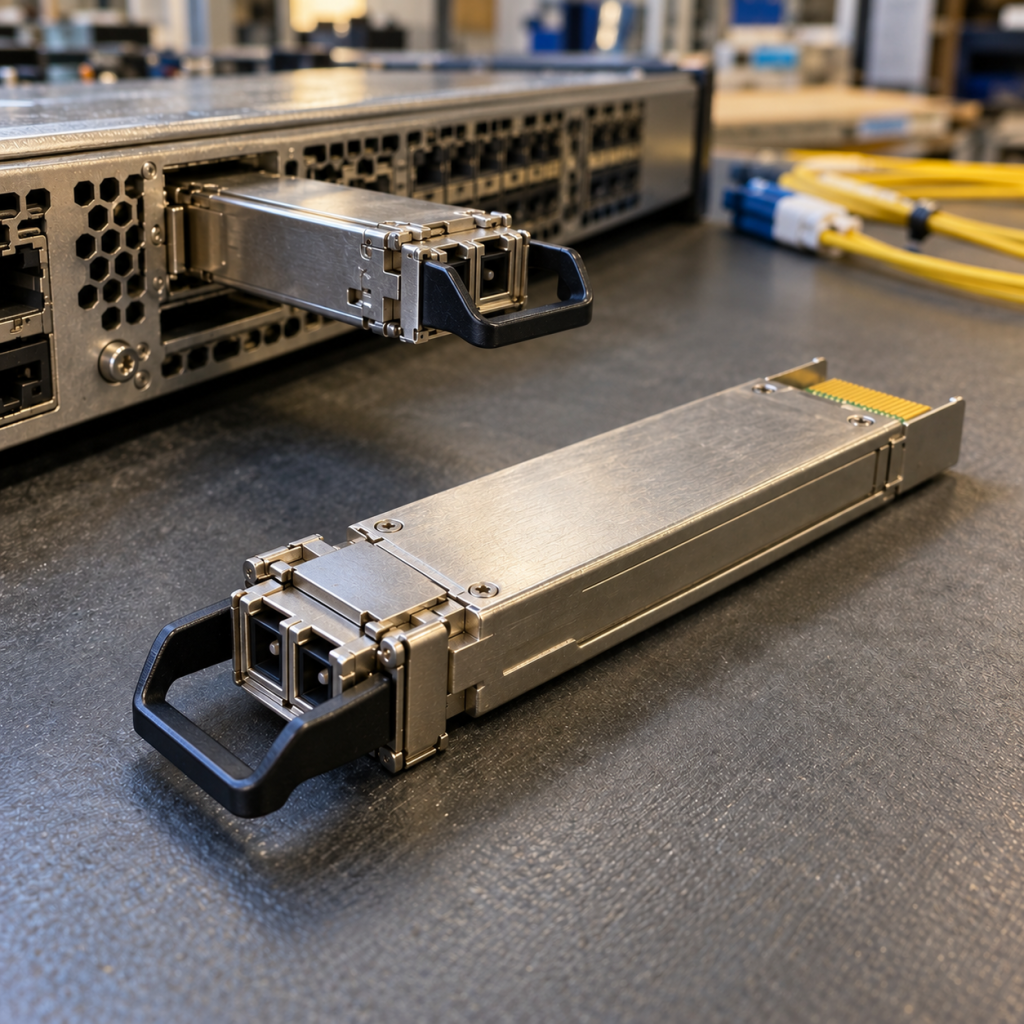



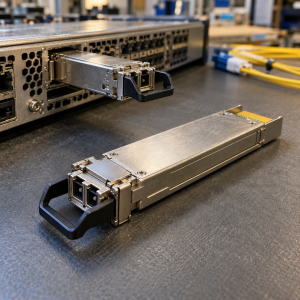
XFP transceivers: the 10G form factor that lost, and why you still need it
XFP is the form factor that did everything right and lost anyway. It arrived first, it was multi-protocol from the outset, it worked across a
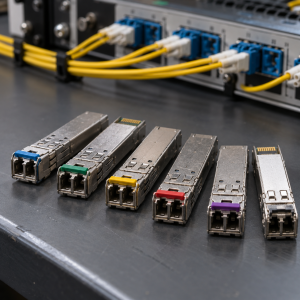
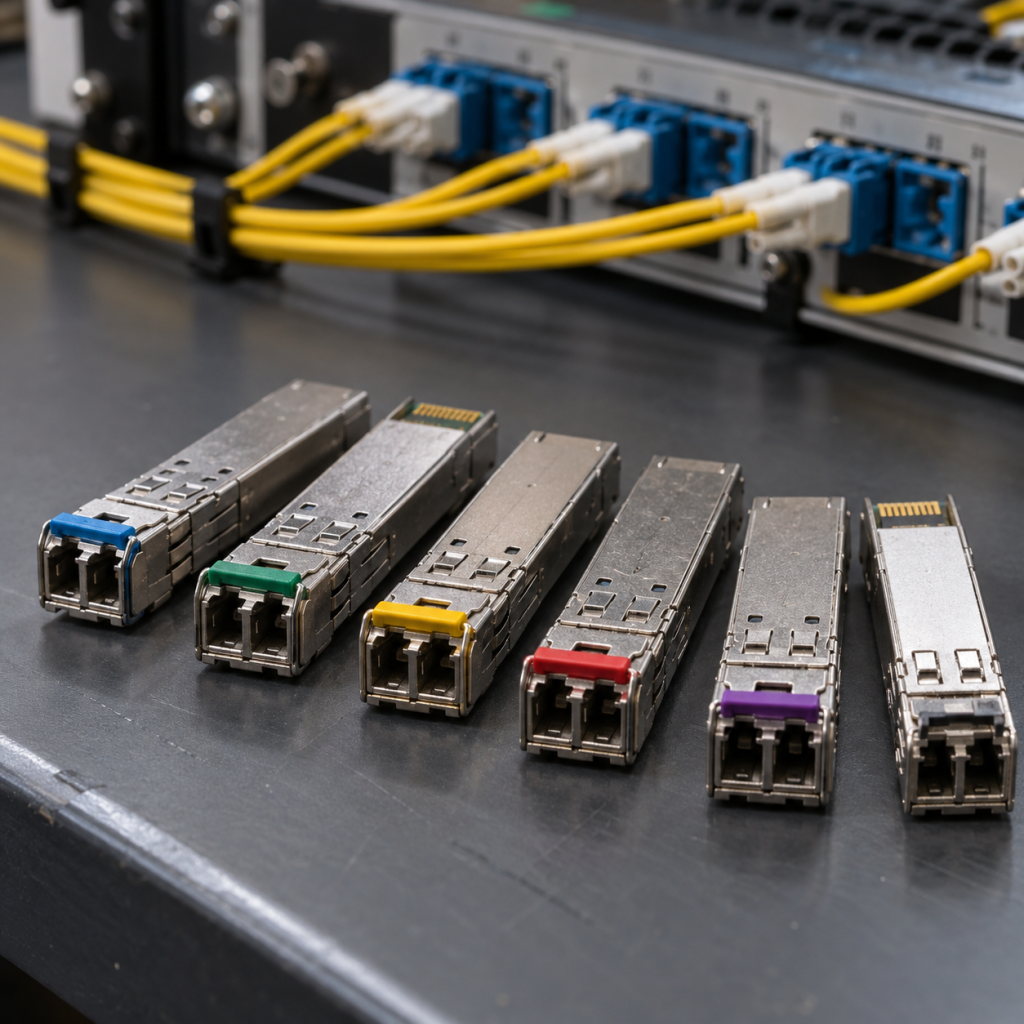
1.25G CWDM and DWDM SFP: putting more links on the fibre you already own
A gigabit is not a lot of bandwidth in 2026. It is, however, exactly what an enormous amount of real infrastructure runs on: substation telemetry,
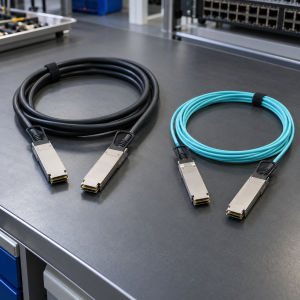
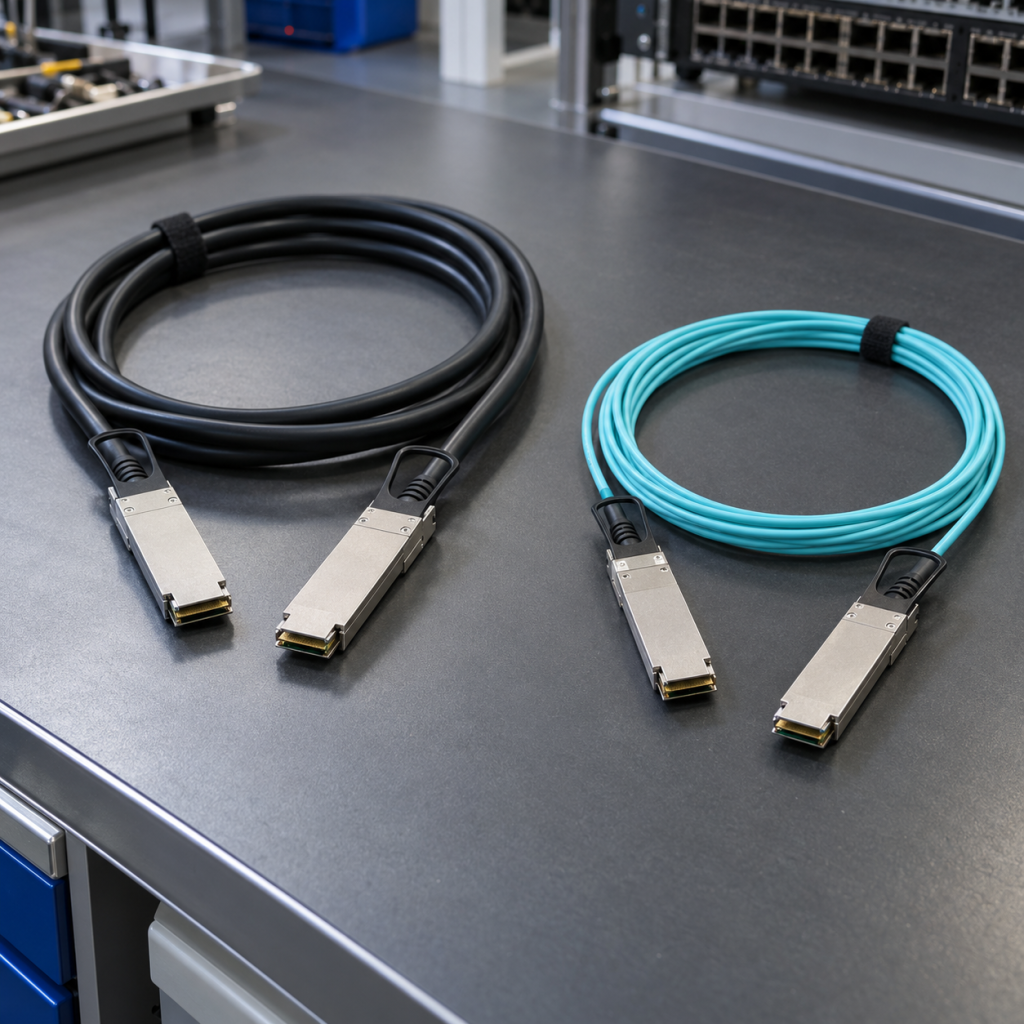
DAC and AOC cables: what to buy when optics are the wrong answer
Almost every buying guide on this site ends the same way: inside the rack, do not buy optics at all. This is the article that

HPE and Aruba compatible optics: reading the J, JD, JL and R part numbers
No vendor’s optical part numbers carry more history than HPE’s. A single network closet can hold a J-series module bought when the brand was ProCurve,
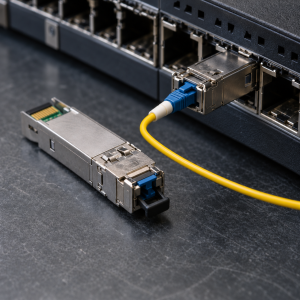
Dell compatible optics: four part-number schemes for one catalogue
Dell optical part numbers come in four unrelated shapes, and the shape tells you which division of the company created the part. There is the

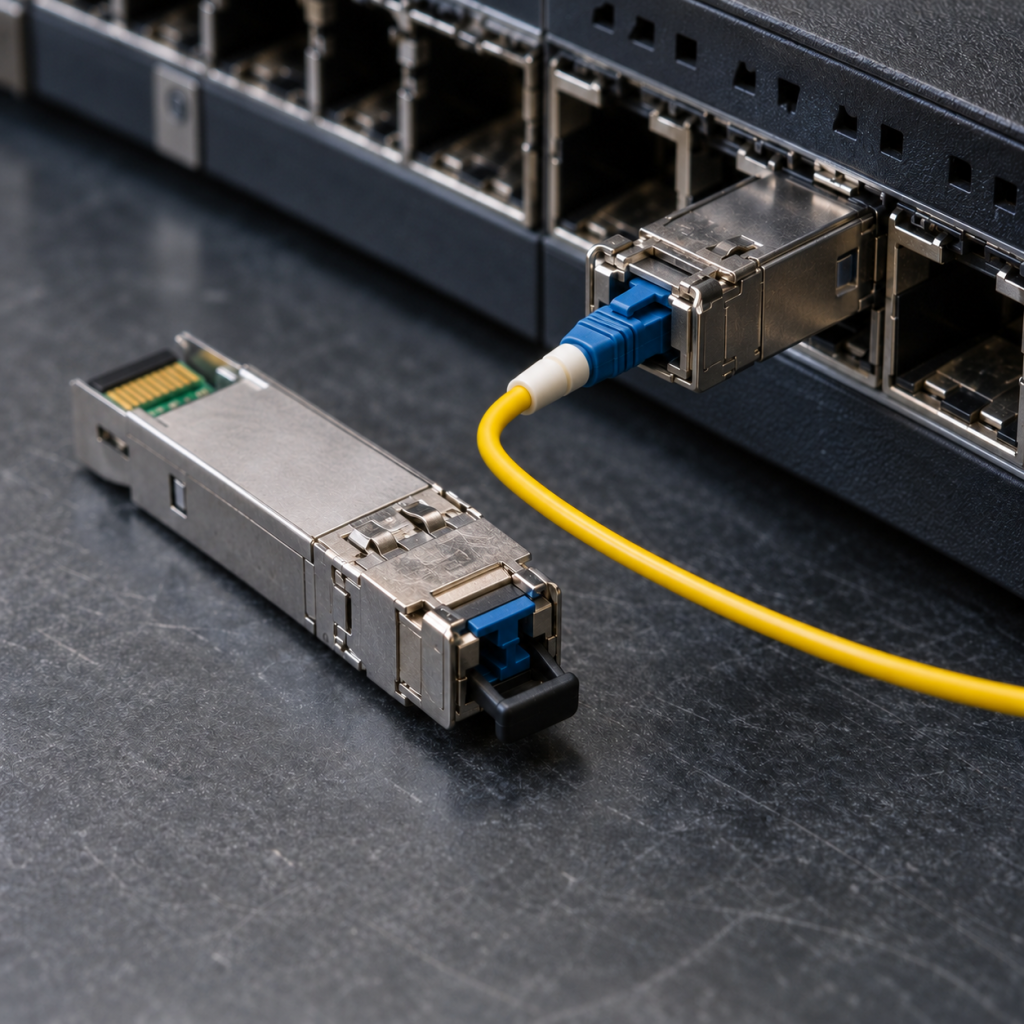
BiDi SFP modules: every single-fibre optic from 155M to 100G
A duplex optical module assumes two fibres: one to transmit on, one to receive on. That assumption is free in a data centre and expensive